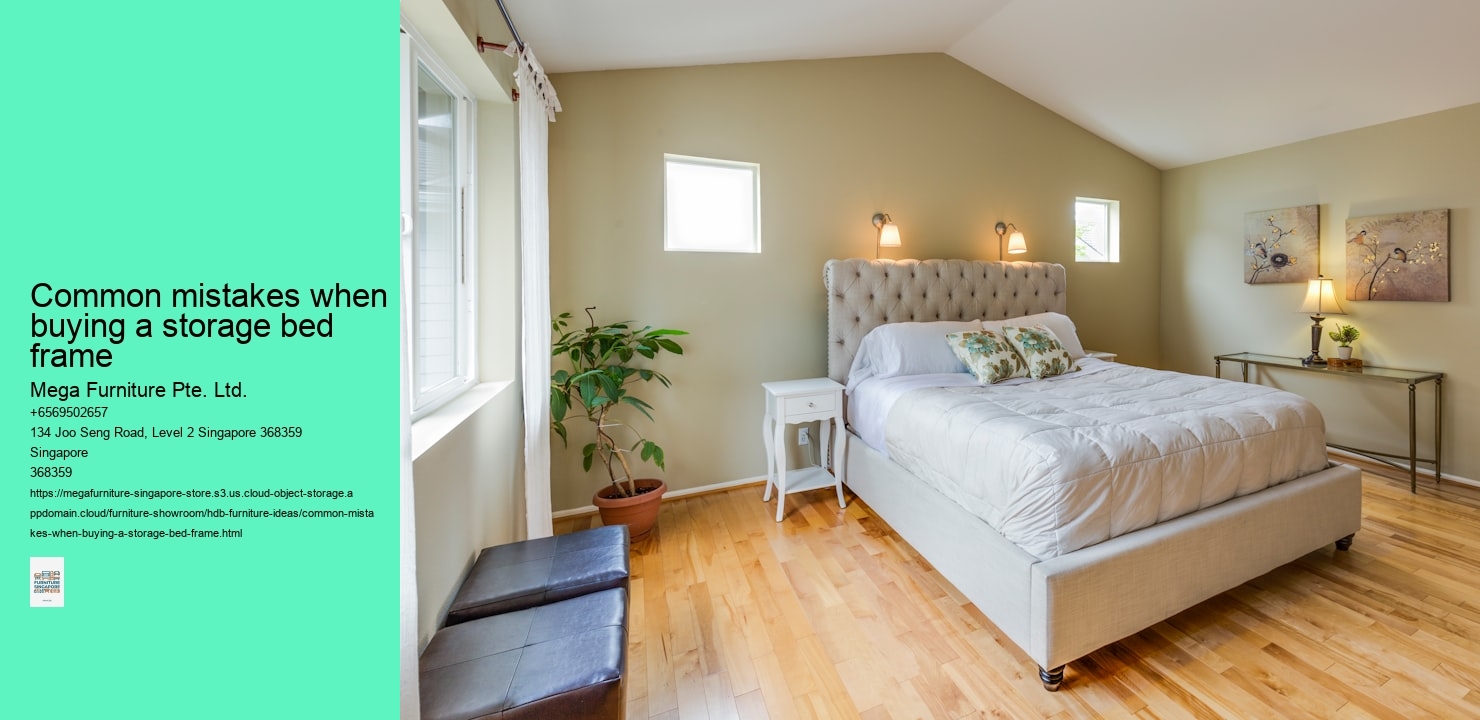
You’re picturing a Queen bed stuffed with seasonal gear and extra pillows, a neat cube of storage under the mattress. Then you realise you need to lift the entire mattress, plus the bedding, every single time you want to reach that winter jacket or spare duvet. That’s the reality for many buyers who get seduced by sheer cubic volume without considering how they’ll actually get things out. The daily chore quickly becomes sian—you’ll just stop using the storage, and all that clever space turns into a sealed tomb for your belongings.
In a typical 4-room BTO master bedroom, there’s rarely enough free floor space beside the bed for full-sized drawers to pull out smoothly. You might have, at best, a 30cm gap on one side, which often isn’t enough for a drawer’s full extension. That leaves you with the lift-up mechanism, which requires clear overhead space and a fair bit of strength. If your bed is tucked under a low ceiling or against a wall, even that option becomes impractical. The maths is simple: if you can’t access it easily, the storage is useless.
The one exception is for truly infrequent, bulky items. If you’re only storing a set of CNY decorations or a single large suitcase you use once a year, then a lift-up bed with a hydraulic hinge might work. You’ll tolerate the hassle because it’s a biannual event, not a weekly dig. For anything else—bedding, regular clothing, kids’ toys—you need a system you can use without rearranging the entire room. That means drawers on the side you actually have floor clearance for, or even open shelves at the foot of the bed.
Look at the actual layout of your room before you commit. Measure the free floor space on each side of your planned bed position, and consider whether a drawer would fully open without hitting a wardrobe or wall. A bed frame is the one piece of bedroom furniture you sleep on every night for years, so it's worth getting right rather than treating as an afterthought to the mattress. Shopping for a bed frame in Singapore comes down to three decisions: the size your room can take, the material, and whether you need storage built in. Sizes run from a 91cm single through to a king around 182 to 183cm — and the honest first step is measuring the room, the doorway, and the lift, since the bed has to get in before it can fit. Material sets the tone and the upkeep: wood for warmth, metal for a slim modern profile, upholstered or divan for softness. And in a compact flat, a storage frame turns the space under the mattress into the cheapest storage you'll ever add. Get those three right and the frame becomes a foundation you won't think about again for a long time.. Think about your own routine: are you willing to lift a heavy mattress panel after a long day? If the answer is no, then prioritise access over total volume. The storage you can actually use is the one that saves you space in the long run.
Getting a bed frame into your flat can be tricky. The real limit is often the lift door, which is about 90cm wide. You'll need a 2–5cm buffer, so a Queen frame's width of 152cm is fine—just watch the assembled height.
Bed frame materials matter a lot here. Rubberwood frames handle Singapore's 80%+ humidity better than particleboard. Performance fabrics like Crypton resist stains, and dark upholstery hides pet hair. That's a practical choice for local homes.

It's a classic case of buyer's regret: a brand-new King storage bed arrives, the drawers won't open, and the afternoon sun is baking your winter blankets. That grand vision of cavernous storage beneath a 183cm wide frame often meets the reality of a 4-room BTO bedroom's footprint. You're not just measuring the floor space for the bed itself—you need to account for the clearance around it for those drawers to actually function. Many master bedrooms, while they can technically fit a King, leave you with maybe 30cm on one side and 60cm on the exit side. That's often not enough for a full-depth drawer to pull out smoothly, especially if you've got skirting or a low-profile bedside table encroaching that space. You'll end up with a beautiful, imposing bed frame and storage you can't properly access.
Then there's the thermal factor, particularly in west-facing units. That relentless afternoon sun warming the room doesn't just make you sweat; it turns the enclosed space under your bed into a warm cupboard. Items you're storing for seasonal use—like heavier blankets or certain clothing—can suffer from that sustained heat, which isn't ideal for preserving fabrics or preventing mustiness. It's a detail often overlooked when you're focused on square footage alone.
Consider the Queen size instead. At 152cm wide, it sacrifices some sleeping space but often gains far more functional storage. The reduced footprint means you're more likely to have the necessary floor clearance to actually use those drawers fully and comfortably. You'll still get substantial under-bed volume, but in a layout that works with the room, not against it. The smaller frame also means less mass absorbing that afternoon heat, keeping your stored items in a slightly more temperate environment.
The exception? If your bedroom layout is genuinely generous—say, a resale flat with a larger master bedroom or a layout where the bed can be centred with ample space on both sides—then a King with functional drawers can be a magnificent storage solution. But for the typical 4-room BTO configuration, where every centimetre is planned, Queen usually wins on practicality. You get the storage you can actually use, without the compromises that come with overestimating the space you've got.
Veneer looks like solid wood, but it's just a thin layer glued onto a cheaper core, often particleboard or MDF. That core is the real problem in our climate—it doesn't handle moisture well. When humidity stays around 80% for weeks, especially during the year-end monsoon, the core can swell and soften. The adhesive holding the veneer layer then fails, and that beautiful surface starts to bubble and peel away. It's a slow process, but in a typical HDB bedroom with limited ventilation, it's almost guaranteed over a few years.
Singapore's constant humidity acts like a steady pressure test on furniture materials. Solid timber, especially kiln-dried rubberwood, absorbs and releases moisture slowly, which might cause minor movement but not structural failure. A veneer-covered panel, however, faces a different battle: the core material itself is absorbing that moisture. Particleboard and MDF aren't stable; they literally expand and their internal structure weakens. This internal swelling creates force that the thin veneer skin simply cannot contain, leading to separation at the edges or across large flat surfaces like a bed frame's headboard.
The initial cost saving is tempting, but the long-term performance gap is substantial. A solid wood frame might cost more upfront, but it's built to last decades, moving with the seasons without breaking. A veneer option, chosen for its lower price and similar look, often starts showing distress within five to ten years—just when many homeowners are thinking about upgrading anyway. That means you're potentially buying twice, or dealing with a deteriorating piece that feels cheap. For a bed frame that supports you every night, that's a poor trade-off.
The issue isn't the veneer itself; it's what lies underneath. Manufacturers use particleboard or MDF cores because they're inexpensive and easy to work with. In a dry climate, they'd hold up fine, but here they're constantly absorbing ambient moisture. Over time, this absorbed moisture causes the core to lose its integrity—it can become crumbly at the edges or even sag under constant weight. Once the core is compromised, the veneer has no solid foundation to adhere to, and the failure is total. You can't fix it; you can only cover it up or replace the piece.
Viewing a bed frame as a long-term investment shifts the calculation completely. The higher initial outlay for solid timber buys peace of mind and eliminates the worry of premature failure. It's one of those pieces you buy once for your BTO and don't think about again. The single exception where veneer might be acceptable is for a strictly temporary setup, like a spare bed in a seldom-used guest room that you know will be replaced soon. For your main bedroom, where you rely on it every night and the humidity is relentless, solid wood is the only sensible choice.

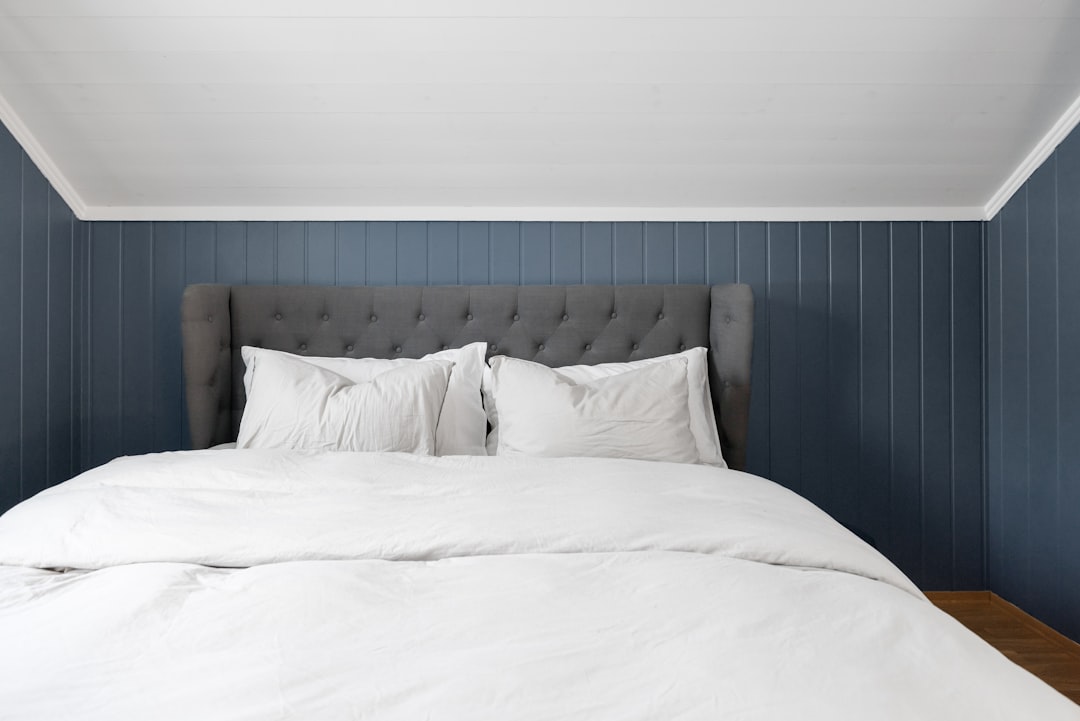
It’s a classic Singaporean trade-off: you want the storage, but you end up compromising the bed. That deep drawer cavity feels like a win, especially when you’re trying to stash extra bedding or luggage in a 12 sqm BTO common bedroom. The problem isn’t the drawer itself; it’s what’s holding up your mattress above it. To get that extra depth, some frames use a slatted base with wider gaps, or a platform with fewer support points. Your mattress ends up sagging into those voids over time, and that’s a recipe for premature wear.
Mattress longevity depends on uniform support. A proper foundation—whether solid panels or closely spaced slats—distributes weight evenly. When the gaps are too wide, the mattress material isn’t held firm. You’ll notice dips forming sooner, especially around the centre where most weight is concentrated. That’s a costly mistake, because replacing a prematurely worn mattress is far more expensive than buying a slightly less cavernous storage frame from the start. Think about it: you’re trading a few centimetres of drawer height for years of mattress life.
There’s a practical limit to how deep a drawer can be while still maintaining a sound bed base. If you’re looking at a frame where the storage compartment seems unusually generous, check the support system underneath. A good rule is to ensure the slats are no more than about 5cm apart—any wider and you’re risking the mattress’s integrity. Some designs cleverly use a hybrid approach, with a solid perimeter and central slats, which allows for decent drawer depth without sacrificing support. That’s the kind of engineering you should look for.
The exception here is if you’re using a very firm, high-density mattress that’s less prone to deformation. A latex core or a particularly rigid innerspring might tolerate wider gaps better than a softer memory foam. But even then, it’s a gamble. For most people sleeping on a standard Queen, the safer bet is to prioritise a well-supported base and accept a drawer that holds folded items, not bulky suitcases. You’ll get the storage function without paying for it later with a ruined mattress.
Storage beds in Singapore are a practical solution, but they come with specific questions that buyers often overlook until after delivery.
Can storage beds cause mould? Yes, they can if you're not careful. Singapore's humidity sits around 80% most of the year, and a sealed, dark space under the mattress is a prime spot for moisture to build up. This isn't a dealbreaker, but you need to ventilate the compartment regularly—lifting the mattress every few weeks to let air circulate is a simple fix. Storing damp items like recently washed bedding directly inside is a sure way to invite problems.
Do they work with memory foam mattresses? Absolutely. The main concern is whether the mattress can bend enough to access the storage. A hydraulic lift-up mechanism requires you to fold the mattress back, and a dense memory foam one might be stiff. Many modern mattresses are flexible enough, but if yours is particularly thick or firm, test the bend in the showroom. Drawer-style beds avoid this issue completely—the mattress stays put.
Are hydraulic lift mechanisms noisy? Generally, they're not. A well-made hydraulic system operates with a smooth, quiet motion. The noise you might hear comes from the mattress or bedding sliding against the frame as you lift, not the mechanism itself. Cheap imports with poorly lubricated pistons can groan, but that's a sign of lower quality.
How much weight can drawers hold? This depends entirely on the frame construction. A plywood or solid wood drawer on a sturdy runner can handle a significant load—think several packed suitcases or a stack of winter blankets. Particleboard drawers on plastic slides, however, will sag over time. The weight limit isn't just about the drawer; the entire bed frame needs to be robust enough to support the extra load without straining the joints. For heavy items, a lift-up bed with a solid base is often a safer bet.
The one real exception to the storage bed rule is for those who prioritise a minimalist aesthetic above all else—the visible bulk of a storage frame can clash with a very clean, low-line look. Otherwise, in a typical 4-room BTO where space is premium, the functionality wins hands down.
" width="100%" height="480">Common mistakes when buying a storage bed frame
The best online photos can’t tell you if a drawer glide will jam after six months of daily use. You’ll only know by pulling one out, feeling the weight, and hearing the sound it makes. A smooth, quiet action with no wobble is what you’re after—that’s the sign of a mechanism that won’t give you grief. The hydraulic lifts on storage beds are another thing you absolutely need to operate yourself. Press down on the mattress to see how much effort it takes to raise the platform; a good one should feel steady and controlled, not like it’s fighting you or threatening to slam back down.
This is why a trip to a showroom with a decent range on display is worth the time. At their larger outlets, you can compare the same feature across different models and sizes. Sit on the bed, lie down, and really get a sense of the fabric or wood finish. A picture might show a nice weave, but your hand will tell you if it’s rough or prone to pilling. For a piece you’ll use every day, that tactile confirmation matters more than any catalogue description.
The exception? If you’re buying a simple, low platform frame with no moving parts, then an online order based on dimensions alone might be fine. But for anything with drawers or a lifting panel, your own physical test is the only real quality check. You don’t want to discover a sticky drawer or a straining hinge after it’s already in your room—then you’re stuck with it.
Your bedroom floor area isn’t just a number you jot down once. In a 4-room BTO master bedroom, that 152 by 190cm Queen bed footprint can look fine on paper, but you’ll want to measure twice—once for the frame’s outer edges and again for the usable floor space left after it’s in. That leftover space determines whether drawers can actually open or if you’ll be shuffling sideways every morning. And note what’s under your feet already: if it’s a floating vinyl plank floor or tiles over a concrete slab, that’s one thing, but if you’re on raised timber flooring or an older parquet, the weight distribution from a heavy storage bed matters more.
Construction gets glossed over too often. A frame labelled “wood” could be solid timber or it could be MDF board with a veneer. The latter is perfectly serviceable for many, especially in a climate-controlled condo, but in a typical HDB with its humidity swings, you’ll want to know which one you’re getting. Solid wood or kiln-dried plywood handles the moisture better long-term; particleboard can swell if it ever gets damp. This isn’t about needing teak, it’s about knowing what you’re buying so you’re not surprised five years down the line.
Then decide your storage priority before you step into any showroom. Hydraulic lift-up beds offer cavernous space for bulky items like winter coats or extra bedding, but they need overhead clearance and a strong back to access. Drawers are easier for daily use—keeping your weekly linens or shoes within reach. You can’t really have both systems working optimally in the same frame, so pick one. If you host often and need to stash guest pillows, the lift-up might win. For everyday convenience in a compact room, drawers are the practical choice.
Finally, confirm mattress compatibility. Not all mattresses work with all frame systems. A traditional spring mattress needs a supportive base with adequate centre support, often a sprung divan or a bedstead with a slatted foundation. Many modern foam mattresses, however, are designed for a solid platform. If you’re planning to use an existing mattress, bring its specs or even a photo of its base. The wrong pairing can lead to premature sagging or an uncomfortable night. It’s a detail that’s easily overlooked when you’re focused on storage drawers, but it’s the one that affects how you sleep every night.