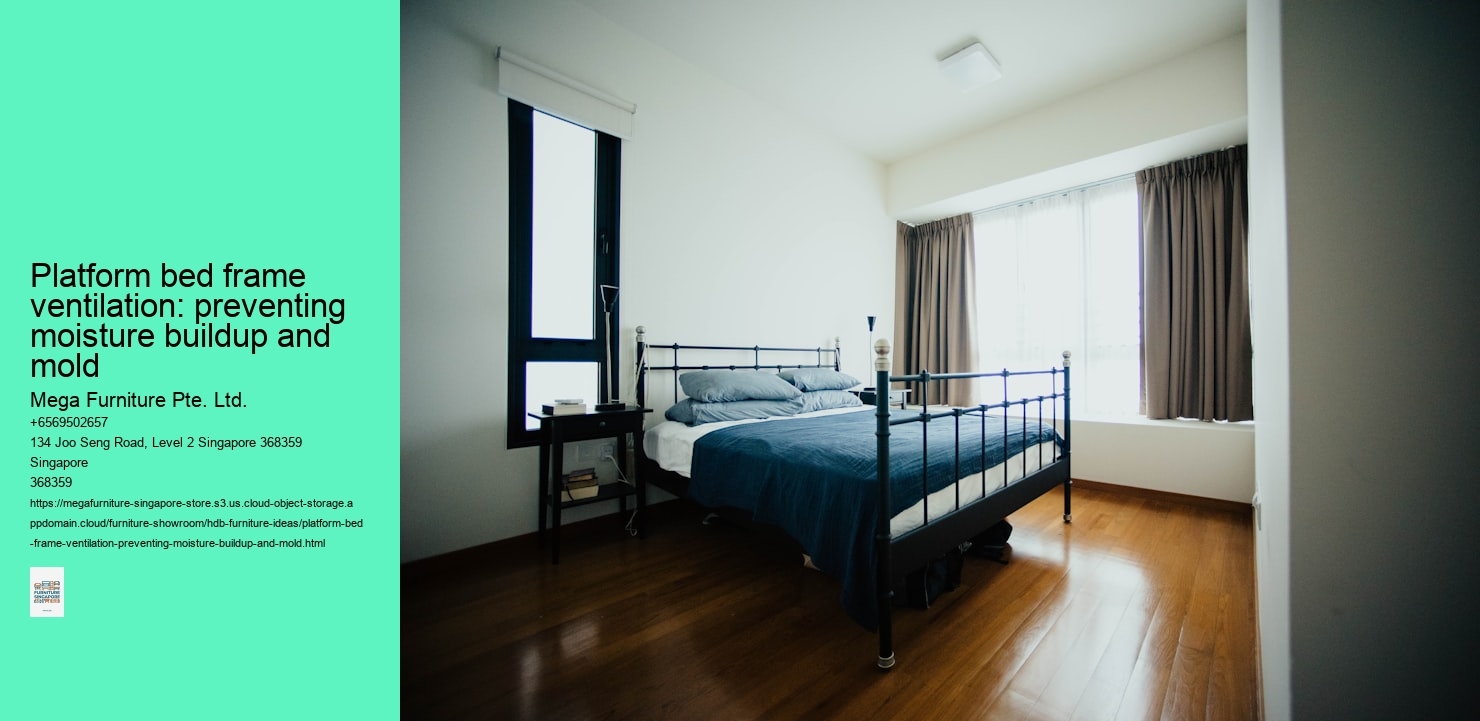
Come June, the monsoon humidity arrives like a blanket, and that's when a hidden problem can surface in your bedroom. You might not see it unless you lift your mattress. In a typical 12 sqm common bedroom, especially in a BTO flat, air barely moves. When a solid platform bed frame sits flush against the floor, it traps all that warm, moist air you exhale every night against the cold underside of your mattress. Condensation forms on the base—a quiet, damp crisis happening right under you.
That dampness doesn't just disappear. Over weeks, it gets absorbed by the mattress itself or starts to work on the frame's material. For particleboard or MDF bases, which are common in budget-friendly frames, this moisture is a death sentence. They'll swell, soften, and eventually crumble. Even a solid timber frame isn't immune; sustained dampness encourages mould spores to take hold, and that's a health issue you really don't want in your sleeping space.
It's a design flaw disguised as sleek minimalism. A bed frame is the one piece of bedroom furniture you sleep on every night for years, so it's worth getting right rather than treating as an afterthought to the mattress. Shopping for a bed frame in Singapore comes down to three decisions: the size your room can take, the material, and whether you need storage built in. Sizes run from a 91cm single through to a king around 182 to 183cm — and the honest first step is measuring the room, the doorway, and the lift, since the bed has to get in before it can fit. Material sets the tone and the upkeep: wood for warmth, metal for a slim modern profile, upholstered or divan for softness. And in a compact flat, a storage frame turns the space under the mattress into the cheapest storage you'll ever add. Get those three right and the frame becomes a foundation you won't think about again for a long time.. A platform bed with a completely sealed base might look clean and modern in the showroom, but in our climate, it's asking for trouble. The issue isn't the bed's style—it's the lack of an escape route for humidity. You need air to circulate.
That's why ventilation isn't a luxury feature; it's a non-negotiable for any platform bed meant for long-term use here. Look for frames with slatted bases or designs that incorporate gaps, channels, or raised feet to let air pass through. This one simple design choice prevents the stagnant, moist microclimate that leads to damage. The only time you might compromise is if you're running a dehumidifier in that room 24/7—but for most of us, that's not realistic. Your bed frame needs to breathe because the air in your room certainly doesn't.
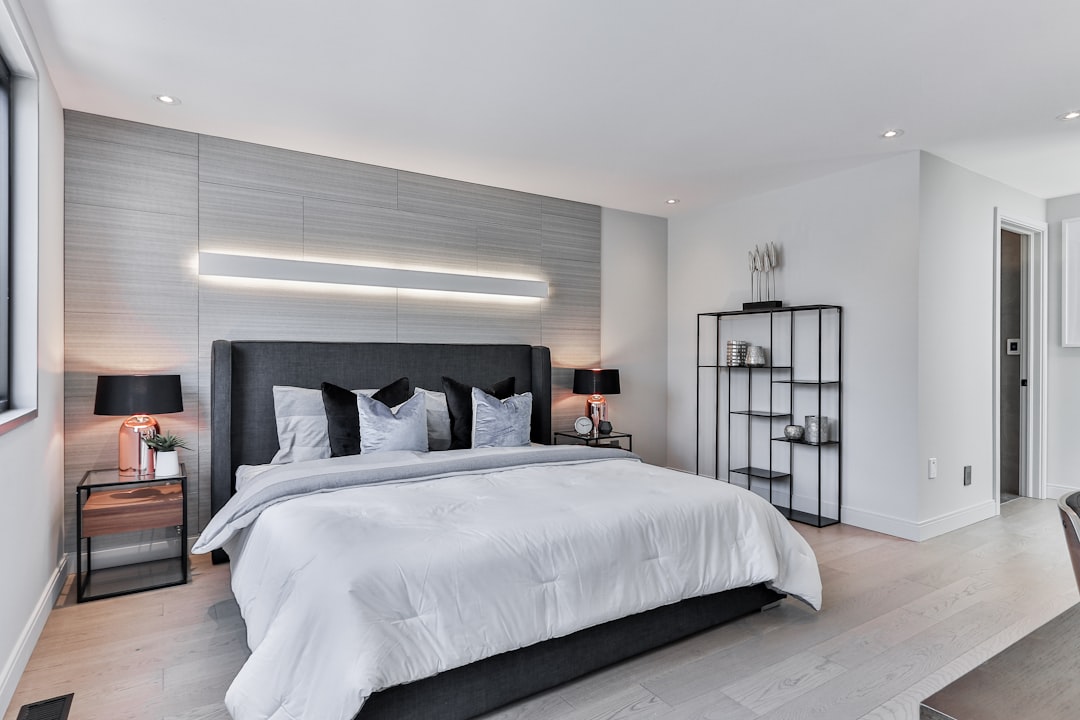
The sleek, low-profile platform bed frame sits flush against the floor, its clean lines a favourite for minimalist interiors. That flush fit, however, creates a hidden problem in Singapore's climate. There's no gap underneath, not even the centimetre or two you'd get with a traditional baseboard. Air simply can't move.
Picture a Queen platform bed in a 3.5 by 3 metre east-facing condo bedroom. Morning sun heats the room, but humidity stays trapped. Moisture from the air—often around 80% or higher—and from the body during sleep pools undisturbed under the mattress. Over weeks, that stagnant dampness becomes a perfect environment for mould. The mattress underside, the platform's surface, even the frame itself if it's made from particleboard or MDF, can all be affected. These materials swell and soften when they absorb moisture, leading to a compromised structure that might feel spongy or show discolouration over time.
It's a design flaw disguised as an aesthetic win. The only time I'd consider a truly flush platform is in a west-facing room with strong afternoon sun that naturally dries the space, or perhaps in a landed home with superior cross-ventilation. For most flats, especially those in humid neighbourhoods or facing the morning sun, that air gap is non-negotiable. You want a path for air to circulate, even if it's just a slim shadow line beneath the frame.
Some frames offer a compromise: a slatted base that sits slightly higher than the side rails, creating a small channel for air to pass through the slats. That's a better option, but it still doesn't match the ventilation you get from a traditional bed frame with a visible baseboard gap. If you're drawn to the low-profile look, prioritise models that incorporate this slatted design or, better yet, a subtle raised perimeter. Otherwise, you're buying a problem that'll surface during the year-end monsoon season, when the air feels thick enough to wear.
Platform bed frames offer clean lines suited to Japandi or Scandinavian styles. Look for finishes that complement your room's colour palette and other furniture. A neutral oak or a dark walnut finish can anchor the bedroom's look.
That beautiful solid rubberwood slab looks steady and feels premium, but it's a thermal sponge. In a west-facing Bukit Batok flat, it'll soak up the afternoon sun's heat and radiate it back long into the night. While it resists mould better than engineered boards, the trapped warmth creates a stuffy microclimate right under your mattress. You'll be fighting the air-con bill more than the humidity. It's a classic trade-off where the material's natural strength works against our specific climate needs.
Cheap laminated particleboard is the real troublemaker for moisture. The laminate itself might seem sealed, but any tiny chip or seam becomes a wick for our 80%-plus humidity. The core is basically compressed wood dust, and it drinks that moisture in, swelling and softening at the edges first. Over a few monsoon seasons, that swollen edge can't support weight properly, and the whole frame gets that tell-tale wobble. It's a false economy that falls apart literally, not just in looks.
For that family in the four-room BTO, a plywood frame with a treated core is the smarter play. The cross-grain construction gives it a stability that solid wood lacks, resisting warping as the humidity shifts. A proper moisture-resistant treatment in the core adds a crucial defence layer without turning the whole piece into a heat sink. It offers a middle path—durable like solid timber but engineered for our conditions. You get longevity without the thermal penalty.
The budget options always skimp on core treatment or use thinner, lower-grade veneers. They might look identical to a better plywood frame in the showroom, even sporting the same colour finish. The difference reveals itself only after months of resting on a HDB bedroom floor, where minor condensation is a constant. That's when the untreated layers start to separate, a slow decay you can't see until the creaking starts. Saving a couple hundred dollars upfront often means a full replacement in five years.
This is the non-negotiable spec you must ask about. A treated core isn't about a surface spray; it's an integrated resistance baked into the material's layers during manufacturing. It's what stops moisture migration deep inside the frame, where you can't wipe it down or ventilate it away. Without it, you're relying solely on the finish, and every scratch becomes a potential failure point. For a platform bed that sits low to the ground, that sealed core is your main defence against the damp rising from the floor itself.
Here’s the thing about ventilation specs: they can sound good on a website, but you won’t know how it feels until you’re there. You can read about slatted bases and airflow gaps, but the actual space between those slats makes all the difference. A solid platform might look sleek, but it traps everything underneath—heat, humidity, the whole works. That’s why a trip to see the frames in person isn’t just browsing; it’s a functional test.
At the showroom, you get to do the simple check that matters. Run your hand under the slats on one of their platform beds—feel the actual gap. Then, place your palm flat on a solid surface right next to it. The contrast is immediate. You’ll see how much air is supposed to move, or more importantly, how little can move if the gaps are too narrow. It’s a five-second test that tells you more than any product description.
This is where testing a mattress on different bases pays off. Bring your own hand weight, or use one of the display mattresses like the Somnuz line they have there. Press down firmly on the mattress where it sits over slats, then over a solid panel. On the slats, you should feel the mattress give slightly and imagine the air channel. On the solid platform, the compression feels dead—no give, and you just know the underside isn’t breathing. That trapped moisture over months in our humidity? That’s how it starts.
So make the trip to Tampines or Joo Seng for this one reason. Don’t just look at the colour or the drawer mechanisms. Spend ten minutes doing this pressure-and-gap check. The right slatted base should have gaps wide enough that you can’t ignore them—that’s the one that’ll work with your mattress to keep things dry. Anything less and you’re buying a problem for your 4-room BTO master bedroom.
The most common platform bed regret isn't about looks or even storage—it's about that tiny, critical gap between the frame and the floor. You see a sleek, low-profile platform that sits flush, thinking it'll look modern and grounded in your 4-room BTO master bedroom. The reality is that a 152 by 190cm Queen frame with zero under-clearance becomes a sealed box, trapping every bit of moisture that Singapore's 80% humidity delivers right to your mattress. Within months, you're not just dealing with a stuffy feeling; you're creating the perfect, stagnant environment for mould to take hold on the underside of a perfectly good mattress.
It's a classic mid-cost mistake. You pay a decent sum for a solid timber or plywood frame, only to realise you need a retrofit. Suddenly, you're hunting for risers or bed legs, which often look like the afterthought they are, or facing the sian prospect of selling the frame and buying a new one with proper elevation. The fix feels wasteful, especially when the initial oversight was so simple.
The clearance you need isn't much—just a consistent 10 to 15 centimetres of open air space underneath. This allows for cross-ventilation, letting the air from your room's air-con or fan circulate freely and carry moisture away. It's a non-negotiable for any solid platform bed, regardless of material. Even kiln-dried rubberwood needs to breathe.
The only time a flush-to-floor frame makes sense is if you're placing it directly on a fully slatted base or a bed frame designed with integrated ventilation channels—but that's a different product category altogether. For a standard platform, that under-bed void is your first and best defence against the climate. Ignore it, and you're essentially paying good money to shorten the life of your mattress and frame both.


The first thing you’ll notice about a platform bed is that solid base—no box spring needed, and that’s a good thing. Box springs are an extra expense and an extra layer that traps warm air right under your mattress. In our humidity, that’s asking for trouble. A proper platform with well-spaced slats or a perforated panel does the job just fine, letting air move.
Can a platform bed cause mould on a mattress? It can, but only if it’s the wrong kind. A completely solid platform with no gaps is the culprit; it blocks airflow completely, letting moisture from your body get trapped. You’ll see it first as dark spots or a musty smell on the underside of the mattress. The best platform for HDB humidity is one that prioritises airflow in its design—think slats spaced about 5 to 7 centimetres apart, or a metal grid base. Solid wood frames are stable, but ensure the support system isn’t a solid sheet of plywood.
So how to make an existing platform bed more ventilated? If you’ve already got a solid base, you’re not completely stuck. A simple, effective fix is to use a breathable mattress foundation or a set of interlocking bed slats designed to sit on top of the platform. They lift the mattress and create that crucial air gap. Another trick is to use moisture-absorbent products made for cupboards in the space under the bed, but that’s a stopgap, not a solution. For a permanent fix, consider drilling a pattern of large holes into a solid wooden platform—it’s a weekend project that makes a world of difference.
The exception here is if you’re using a very old innerspring mattress that specifically requires a box spring for support. Those are rare now. For modern memory foam or latex, a ventilated platform is actually better. Just remember to occasionally pull the mattress off for a quick vacuum underneath—dust and moisture love to team up.
Before you sign off on that floor plan, there’s one last thing to do in the actual room. It’s not about the bed itself yet—it’s about the air around it. In a typical resale flat common bedroom, maybe around 12 sqm, you need to know if a cross-breeze actually exists. Stand in the centre of the space, feel for any movement. If the windows and door create a decent channel, you’re golden. If the air feels still and heavy, that’s your warning. Humidity settles where air doesn’t move.
This is where mattress breathability comes in. Even with a ventilated platform frame, a mattress that traps heat and moisture underneath is asking for trouble. You’ll want a core that lets air pass through—open coil, latex, or a hybrid with good channeling. Memory foam on its own, especially the denser varieties, can be a bit of a sponge for warmth. Pair that with a stagnant room, and you’ve got the perfect recipe for that damp feeling you’ll notice every morning.
So your final checklist is simple, but it’s physical. Measure the potential airflow path with your own senses. Then, confirm the mattress spec isn’t just about comfort but about letting that air circulate. The frame does its job by providing the gap, but the mattress needs to cooperate. In a west-facing flat that gets that intense afternoon sun, this combo becomes even more critical—heat builds up, and you need every bit of ventilation working for you.
The only exception? If you’re absolutely committed to a specific, non-breathable mattress for medical reasons, then you compensate. You go for a platform frame with the maximum possible gap underneath, maybe even add a fan to the room’s layout. But for most people, aligning the room’s airflow with the bed’s breathability is the straightforward win. It’s the last box to tick, and it’s the one that keeps everything fresh.