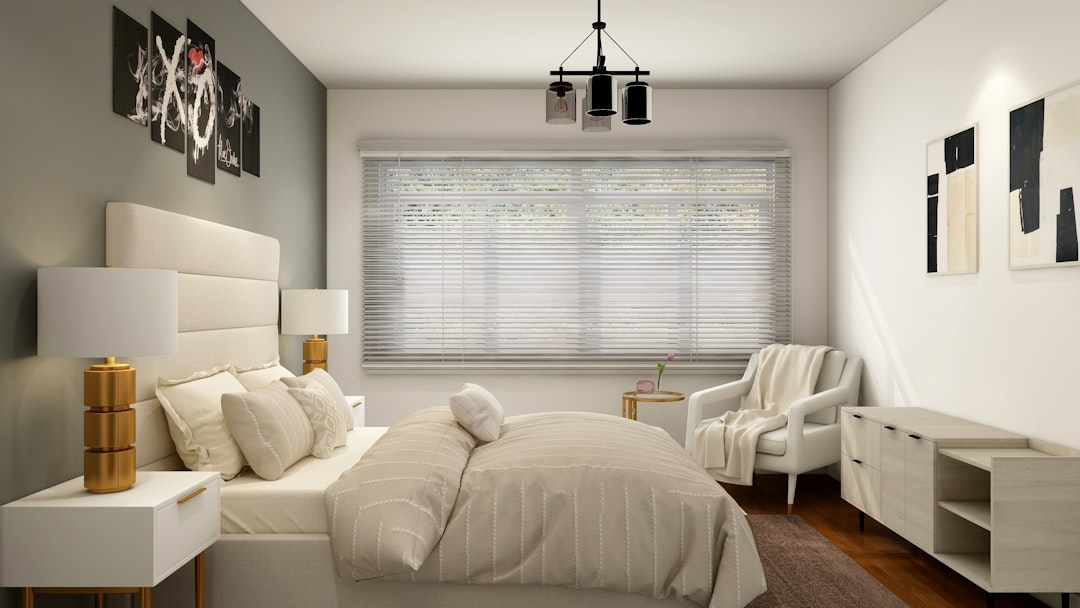
A Queen divan in a 12 sqm master bedroom can swallow half the floor space if you pick the wrong footprint. Many layouts place the bed facing the wardrobe, which means you’ll be navigating that narrow channel every morning and night. The frame’s bulk, especially around the base, dictates whether you move freely or feel like you’re squeezing through a corridor.
Opt for a streamlined platform divan with clean lines and minimal side overhang. That extra few centimetres of protruding base around a traditional divan eats into your precious walking path. A bed that sits flush, or even one with a slightly recessed base, gives you that crucial buffer. You’ll appreciate it when you’re trying to open a wardrobe drawer without banging your knees. Consider a design where the mattress sits within the frame’s perimeter, not perched atop a wider foundation.
Storage is a double-edged sword here. Hydraulic lift-up storage is fantastic for capacity, but you need full overhead clearance to open it—a non-issue if your ceiling is high. Side drawers, however, demand floor space to pull them out. In a tight room where the bed faces the wardrobe, drawers on the wardrobe side become unusable unless you leave a gap. Often, the smarter choice is to forgo those side drawers entirely and rely on the lift-up mechanism, or even a simpler frame with no storage at all if your flat has other solutions.

The exception? If your wardrobe is a sliding-door design and sits flush against the wall, you might reclaim that floor space. Then, side drawers could work. But for most BTO layouts with hinged doors, a bulky divan with drawers on both sides will make the room feel like a puzzle you’ve solved incorrectly. Go for a lean profile, prioritise vertical storage access, and your daily movement won’t be a constant negotiation.

That afternoon sun hitting your west-facing bedroom window is a brutal test for materials. It’s not just about the glare—it’s the heat and humidity combo that quietly picks apart your choices over the years. Rubberwood, being a kiln-dried hardwood, generally holds up better than you’d expect. It can resist mould, which is a win in our 80%+ humidity, but it might still warp a little if the room’s ventilation is poor. That movement is normal for solid wood, not always a defect, but it’s something to live with.
Velvet upholstery on a divan, however, is a different story. The rich colour and texture that look so good in the showroom can fade under that sustained afternoon exposure. More critically, the fabric’s dense weave becomes a favourite spot for dust mites in a humid climate, especially if you’re not running the air conditioner every night. It’s a fabric that asks for more care than a typical HDB bedroom can often give.
So where does that leave you? For a west-facing room, I’d lean towards a timber frame over a fully upholstered divan. The rubberwood option gives you that stability against mould, and any slight warping over time is usually manageable. A velvet-covered divan, while luxurious, feels like a commitment to constant maintenance—regular vacuuming, maybe even a dehumidifier—that many homeowners find sian after a while.
There’s one exception, though. If you’re someone who keeps the bedroom cool and dry consistently, maybe with the air conditioner on a timer, and you’re diligent about cleaning, then a velvet divan could work. But for most of us, dealing with the natural humidity and that strong afternoon sun, the timber frame is the steadier choice. It’s the one that won’t surprise you with faded patches or become a dust mite haven when the monsoon rolls in.
Laminate surfaces on budget frames often start to separate after a few years of daily use. That glossy top layer, which looks perfectly fine when new, can lift at the edges or bubble near the headboard. It's not just about aesthetics; the exposed substrate underneath then becomes vulnerable to moisture and further damage. In a typical resale condo bedroom, where humidity fluctuates and beds get bumped against walls, this peeling becomes a visible sore point. You'll notice it every morning, a constant reminder of the initial savings that didn't quite last.
Moving up to a solid wood veneer offers a fundamentally different material story. This finish is a thin slice of actual timber bonded to the core, so it wears like wood rather than a printed film. The colour and grain remain stable because they're inherent to the material, not a surface coating. Over five years of regular contact—from placing a water glass on the bedside ledge to sliding luggage out from under—the surface might develop a gentle patina but won't fundamentally change. That consistency is what keeps a bedroom feeling cohesive long after the move-in date.
Consider the specific abrasions a bed frame endures in a compact Singapore bedroom. Your knees might knock against the side panel when you get up, and bedside tables are often shifted, scraping the frame's finish. In a Queen-sized divan occupying a ~3.5x3m master bedroom, there's little buffer space. A laminate finish can scuff and reveal a different colour underneath, creating stark white lines on a walnut-look frame. A solid veneer, however, will scratch to a similar depth of colour, making minor marks far less conspicuous. This difference defines whether your bed still looks integrated after half a decade.
The initial price gap feels significant at the point of purchase—you're weighing several hundred dollars. But spread that extra cost over the anticipated lifespan of the furniture, and the annual premium shrinks to a manageable figure. Think of it as investing in the future state of your room, avoiding the need for a replacement or the dissatisfaction of living with a deteriorating centrepiece. For BTO owners furnishing their first home, this is a classic trade-off: upfront budget versus long-term domestic harmony. The mid-range option often wins that calculation because it postpones another big decision for many more years.
In the context of a resale property, where you're inheriting the wear patterns of previous owners, your own choices set a new baseline. Introducing a budget frame that degrades visibly within five years adds to the cumulative sense of wear in the space. Conversely, a well-maintained solid veneer frame can actually elevate the room's perceived quality over time, counteracting other minor flaws in the condo. This isn't about impressing guests; it's about creating a private environment that feels cared-for and intact. That psychological return, the absence of regret each time you glance at the bed, justifies the higher starting ticket for many buyers.


You start a family, and suddenly every corner in your flat becomes a potential hazard. That sleek wooden bed frame you picked for your first BTO—the one with the crisp, sharp edges—now looks like a collection of head-height obstacles. Toddlers don't navigate; they tumble. They bounce off walls, ricochet off furniture, and a hard corner at the wrong height is a recipe for tears, or worse. That’s when the divan’s upholstered, rounded profile shifts from a style choice to a genuine safety feature.
It’s a subtle but critical pivot in your priorities. Early on, you might prioritise clean lines and a material that feels substantial, like solid wood or a metal frame. After kids, the calculus changes. A padded edge absorbs impact. A soft radius on the headboard or the footboard means a late-night stumble doesn’t leave a bruise. You’re not just choosing a bed frame for yourself anymore; you’re evaluating it as part of a shared environment where a small person’s safety is non-negotiable.
Consider the typical HDB master bedroom layout—a Queen bed crammed into a space that’s maybe 3.5 by 3 metres. There’s barely room to walk around it. In that tight squeeze, a child climbing onto the bed or playing on the floor is constantly within arm’s reach of the frame’s perimeter. A wooden corner at that exact spot is a constant threat. An upholstered divan, with its fully wrapped edges, turns that perimeter into a buffer. It’s one less thing to worry about during the chaotic years when your bedroom often doubles as a play area.
The exception? If your child’s room is strictly theirs, and your master bedroom remains a private, adult-only sanctuary, you might keep the sharp-cornered frame. But for many Singapore families, especially in 4-room flats where space is shared, the master bedroom becomes a family room by default. The soft edges aren’t a luxury then; they’re a practical necessity. You’ll appreciate them every time you hear a thump against the bed and realise it was just a soft bounce, not a sharp crack.
" width="100%" height="480">Matching your divan bed frame to your bedroom styleYou've spent half an hour scrolling through mattress specs online, comparing foam densities and coil counts, and you still don't know how it'll actually feel. The numbers tell you something, but they don't tell you everything—especially when you're pairing it with a new divan frame after years on a basic setup. That's where a showroom visit becomes non-negotiable. At Megafurniture's Joo Seng outlet, you can sit, lie, and properly test their Somnuz® mattresses on the actual divan bases they sell. It's the difference between reading a recipe and tasting the dish.
The fabric weave, the firmness gradient, the way the mattress settles into the divan's platform—these are things you assess with your body, not a spreadsheet. For someone upgrading from a frame that's seen five to ten years of use, your support needs have likely changed. You might discover you prefer a medium-firm feel now, where a decade ago you wanted something softer. Lying down for a full minute in the showroom lets you feel if there's any unwanted sinkage at the edges, or if the combination creates a stable, unified sleeping surface. Online, you're guessing; in person, you're deciding.
There's one concrete reason to make the trip: you get to judge the pairing as a complete unit. A mattress might feel great on a concrete floor, but behave differently on a specific divan frame. The showroom lets you eliminate that uncertainty. You can check the clearance, see how the mattress sits flush with the frame's sides, and ensure the overall height works for your HDB bedroom. After a long day, that kind of confidence is worth more than any online discount.
Sure, you could order based on reviews and hope for the best. But for a purchase you'll use every night for the next decade, hoping isn't a strategy. The only time I'd skip the visit is if you're dead certain on your preferred firmness and have already tested that exact mattress-frame combo elsewhere. Otherwise, your body needs the final say. Go down, take your time, and let the showroom do what a website can't—give you the real, physical answer.
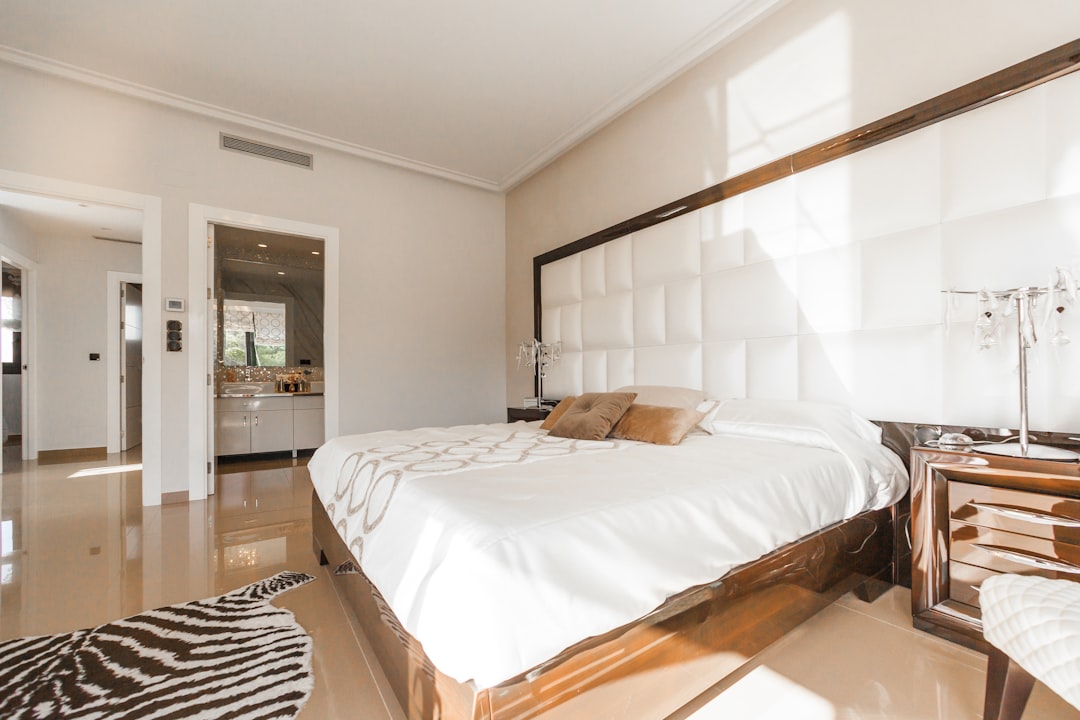
The most common worry I hear is about squeezing a Queen divan into a typical BTO master bedroom. It's a 152 by 190cm footprint, and that's not small. With the usual layout, you'll want at least 60cm clear on the side you exit from, and maybe 30cm on the other sides. That's tight in a room around 3.5 by 3 metres. But it can fit—just don't expect to walk around it freely if you've also got a wardrobe on the opposite wall.
How much weight can a queen-size divan drawer hold? A decent plywood drawer, the kind that's stable in our humidity, should handle around 30 to 40 kilograms. That's enough for your winter blankets, spare pillows, or a couple of luggage sets. Don't treat it like a moving box for books or dumbbells; the runners and the base panel aren't built for that kind of constant strain. If you're storing heavier items regularly, a hydraulic lift-up base is a better bet, though you'll need overhead clearance to open it.
Do divan beds need special cleaning for mould? If you've got a fabric-upholstered divan, the main risk isn't the frame—it's the padding and fabric against the wall in a poorly ventilated room. That sustained 80% plus humidity can lead to spots if air doesn't move. A dark, patterned fabric hides it better, but prevention is straightforward: just pull the bed away from the wall every few months to let air circulate. For the base itself, a wipe down with a dry cloth is usually enough; it's the mattress that needs more attention.
Is a divan better than a platform bed for back pain? This one honestly depends on the mattress more than the frame. A divan gives you a solid, flat foundation—no gaps or slats—which is good for uniform support. But if your mattress is already providing the right firmness and contour, the frame type becomes secondary. The only real exception is if you're using a very thin, traditional mattress; a divan's firm base might feel too hard compared to a platform with a thicker mattress pad. For most modern mattresses, either frame works fine.
You’ve measured the room, but the delivery path is the real hurdle. Picture a Queen divan frame arriving at your doorstep—it’s not just a box, it’s a 152 by 190cm rigid structure that won’t bend like a mattress. That 90cm lift door opening in your older Eunos block is the true choke point, not your bedroom doorway. If the corridor has a tight turn before the lift, even a Super Single might need a staircase carry. Leave a 2–5cm buffer; skirting eats another centimetre.
Material tolerance for our humidity isn’t an abstract concern—it’s about whether the plywood in your storage bed will stay stable or if a cheaper particleboard core might swell after a few monsoon seasons. Solid wood can move a little, which is normal, but you want a frame that won’t feel compromised by the constant 80%+ dampness. West-facing flats add afternoon sun that can dry out and fade certain finishes over time. So, decide: are you after a kiln-dried rubberwood frame for longevity, or is a well-made plywood option sufficient for your budget? This choice locks in before you step into any showroom.
Storage needs often get simplified to “more drawers,” but consider the overhead clearance in your 3.5 by 3 metre master bedroom. A hydraulic lift-up bed needs space above to open fully, while side drawers require floor space you might have earmarked for a dressing table. In a 12 sqm common bedroom, that floor space is precious. The one real exception? If your flat has a dedicated storeroom or you’re a minimalist downsizer, a plain platform frame without storage might actually serve you better—you’ll gain a cleaner look and lose zero functionality.
So, settle these three points: the exact dimensions with clearance, your material pick for climate resilience, and your true storage calculus. Then your showroom trip becomes a confirmation, not a discovery. You’ll know a King can fit if you’re willing to sacrifice that bedside cabinet, and you’ll understand why a certain finish is worth the premium. Walk in with those decisions made, and you’re just judging comfort and final colour. That’s the difference between buying with confidence and buying with regret.
Singapore’s 80%+ humidity and sun exposure challenge certain bed frame materials. Untreated natural leather or solid timber can develop mould or cracks without proper care and ventilation. Performance fabrics and treated woods offer better resistance. Regular wiping and keeping frames away from direct sunlight prolong their life.