
You'd think you're buying 107 by 190 centimetres. That's the mattress measurement for a Super Single, after all. So you clear a 110 by 200-centimetre patch on your floor plan, maybe even leave a five-centimetre buffer for good measure, and assume you're safe. That's where the trouble starts. The true footprint of the frame itself—the headboard's thickness, the side rails, the legs that jut out—quietly adds another five to fifteen centimetres to both the width and the length. In a generous master bedroom, you might never notice. In a 12 sqm HDB common bedroom, that extra bulk becomes a serious obstacle.
Picture the typical layout: a wardrobe door needs a clear swing radius to open fully, and a walkway to the en suite—if you've got one—needs to stay clear. That unaccounted-for width from a bulky upholstered headboard or a platform base with an overhang can easily block that door. Suddenly, you're squeezing sideways between the bed and the wall every morning, or you can't open the bottom drawer of your wardrobe without first climbing onto the mattress. It's the kind of daily friction that transforms a peaceful bedroom into a source of minor, constant frustration.
The real pinch point isn't the room itself, but how you move through it. That extra length from a footboard or an extended platform frame can eat into the precious space at the foot of the bed. In a tight room, that's often the only clear path to the other side, or where you'd hoped to place a slim laundry hamper or a small bench. Losing it means the room feels cluttered and cramped from day one, long before you've even made the bed.
So what's the fix? Take the manufacturer's stated frame dimensions as your gospel, not the mattress size. Then, mark those exact dimensions on your floor with painter's tape, or arrange some boxes to physically block out the space. Walk around it. A bed frame is the one piece of bedroom furniture you sleep on every night for years, so it's worth getting right rather than treating as an afterthought to the mattress. Shopping for a bed frame in Singapore comes down to three decisions: the size your room can take, the material, and whether you need storage built in. Sizes run from a 91cm single through to a king around 182 to 183cm — and the honest first step is measuring the room, the doorway, and the lift, since the bed has to get in before it can fit. Material sets the tone and the upkeep: wood for warmth, metal for a slim modern profile, upholstered or divan for softness. And in a compact flat, a storage frame turns the space under the mattress into the cheapest storage you'll ever add. Get those three right and the frame becomes a foundation you won't think about again for a long time.. Open your imaginary wardrobe door. See if your actual bedside table can still fit on the side you prefer. This extra step feels fussy, but it's the only way to be sure your new bed fits your life, not just your floor plan. The one time you can skip this is if you're choosing a minimalist metal frame with no headboard and legs that tuck directly under the mattress—those come close to the pure mattress footprint. For anything else, from storage beds to plush upholstered designs, trust the frame's specs, not the mattress tag.

A storage bed with drawers looks perfect on paper, especially in a 3-room resale flat where every square foot counts. You’ve measured the room, you’ve checked the bed frame’s dimensions against your Super Single mattress, and it all fits. The problem often isn’t the bed itself—it’s the floor space you forgot to account for. Those drawers need a clear runway to slide all the way out, typically 40 to 50 centimetres of empty floor in front of them. In a narrow walkway, that’s a luxury you might not have.
Measure from the wall, not the edge of the bed frame. That’s the counterintuitive bit. If your bed is pushed against a wall on one side, the drawers on that side are decorative at best. Even on the free side, you need to consider the path from the bedroom door. A common bedroom in an older flat might only be about 12 square metres, with the door swinging in and a wardrobe claiming its own territory. You might end up with a beautiful storage bed you can’t fully use, which is a frustrating waste of money and potential space.
It’s a classic oversight. People get the tape measure out, confirm the 107 by 190 centimetre frame will fit between the walls, and call it a day. They don’t lay the tape on the floor to map out the drawer’s full extension. That extra half-metre is the difference between easily accessing your spare bedding and having to perform a contortionist act every time you need a bedsheet. For a truly functional setup, you need to plan the room’s circulation first, then place the bed.
The one real exception is if you’re absolutely certain those drawers will only store items you rarely need, like out-of-season clothes or travel luggage. Then, a partial pull might be acceptable. But for daily or weekly use—storing pillows, blankets, or kids’ toys—that full clearance is non-negotiable. If your room’s layout can’t give it, you’re better off with a hydraulic lift-up storage base instead, which trades floor space for overhead clearance. That’s a different set of calculations, but at least your storage will be accessible.
That plush upholstered headboard looks fantastic in the showroom, propped against a vast feature wall. In a typical 12 sqm BTO common bedroom, it becomes a spatial thief. The frame itself fits the 107 by 190cm super single dimensions, but the headboard adds another silent 10 to 25 centimetres to the total length. Your eye registers the bed's footprint from the wall outward, not from the mattress edge, so the room feels shorter instantly. This is the first mistake many new homeowners make, prioritising a mood board moment over practical floor space.
Every centimetre counts when you're aiming for that crucial 60cm clearance on the exit side of the bed. A thick panel headboard pushes the entire sleeping surface further into the room, eating directly into that walking lane. You might still technically fit the bed, but the space beside it shrinks to a cramped shuffle. That balanced, open feeling you wanted for the room disappears, replaced by a layout that feels perpetually pinched and awkward to navigate daily.
New BTO feature walls often incorporate lighting, textured paint, or cladding that itself has depth. Mounting a substantial headboard against this already protruding surface compounds the problem. The bed doesn't sit flush against a flat wall; it stands off from it, creating a dead zone behind the headboard that collects dust and wastes precious room length. What was meant to be a cosy, integrated look can end up making the bed seem like an island adrift, disconnected from the architecture of the room.
You can achieve a styled bedroom without surrendering centimetres. Consider a bed frame with a slim, integrated headboard profile or use a separate, wall-mounted headboard that is no thicker than the wall itself. Another tactic is to use oversized pillows and bolsters against a plain wall to create the soft, upholstered illusion without the permanent bulk. The goal is to keep the functional bed length as close to the mattress length as possible, preserving every bit of floor area for living, not just for furniture.
Always measure the room's clear length, subtract your desired clearance, and *then* look at bed frames. The listed super single dimension is just the mattress platform; you must ask for or measure the total assembled length including the headboard. That final number is the one that matters. A sleek platform frame might lack the immediate drama, but it grants you breathing room—and in a compact flat, that space is a luxury more valuable than any temporary style trend.
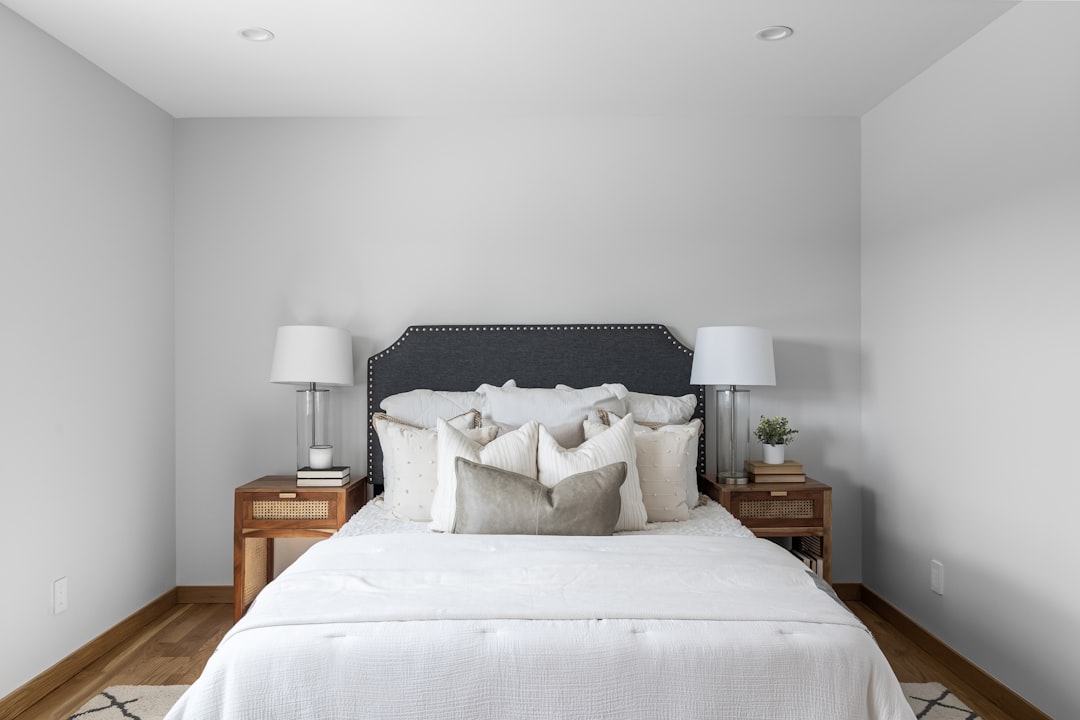

The silhouette of your bed frame against the floor changes a room’s entire feel. A solid platform base presents a grounded, monolithic block, its edge meeting the flooring directly with a clean, modern line. That seamless look comes at a cost for our climate, however. In a humid flat where air circulation is king, that flush seal traps moisture and dust underneath, creating a perfect pocket for mould to develop unseen. You won’t know until you shift the whole heavy frame during your annual spring clean—then it’s a nasty surprise.
A divan on legs, by contrast, is the pragmatic choice for Singapore. That visible space beneath isn’t just aesthetic; it’s functional ventilation. It lets air move freely, discouraging dampness, and makes running a robot vacuum or a quick mop underneath a trivial weekly task. For a common bedroom in a 4-room BTO, that bit of visual lift can make the space feel less hemmed in, countering the boxy dimensions with a sense of airiness. The legs create a shadow line that lightens the furniture’s visual weight considerably.
But the platform’s low-slung profile isn’t without merit, especially in tighter quarters. In a narrow walkway between bed and wardrobe, a divan’s protruding legs become shin-bruising hazards. The platform’s smooth, continuous edge is safer for navigation. The real trade-off is protection for your flooring. That same solid platform edge, if it lacks a proper felt or rubber bumper, will act like a sander against your vinyl or engineered timber every time the bed shifts slightly—and it will shift. Over years, that scuffing adds up to a visible wear line.
So which one wins? For most HDB layouts, the divan’s airflow and cleanability are the smarter long-term play. The single exception is a truly cramped space where every centimetre of floor is a battle—there, the platform’s flush footprint and lack of protruding obstacles justify the extra maintenance effort. Just be sure to check for those protective pads underneath; if they’re not there, add them yourself before the bed ever touches the floor.
A centimetre on a screen is a world apart from a centimetre in your room. You can stare at product specs all day and still not grasp how a Super Single bed frame will command the floor space of a typical 4-room BTO common bedroom. The bulk of a storage bed, the true reach of a headboard, the actual clearance needed to open those drawers fully—these are physical truths that demand a physical check.
That’s why a trip to a showroom isn’t just browsing; it’s a crucial stress test. Bring your floor plan, the one with the door swings and the AC unit marked. Stand beside the assembled frame. Can you still open that wardrobe door? Walk around it. Is there still a comfortable path to the balcony? Try pulling out the drawers. You’ll see if your skirting board or that awkward corner will block them halfway. These are the small, frustrating discoveries you want to make *before* delivery day, not after.
And it’s not just about the frame. Lying down on the mattress you’re considering—feeling the firmness gradient, checking if the edges hold when you sit—that’s intelligence you cannot get from a review. A bed is a system: the frame supports the mattress, and together they define your sleep. Experiencing that combination in person closes the gap between expectation and reality.
Some might say it’s a hassle, that online pictures should be enough. But for a piece you’ll use every single day, an hour’s trip is a minor investment. The only time I’d skip it is if you’re ordering an exact replacement for a frame you already own and know fits perfectly. For anything new, especially in our compact flats, seeing and touching the real dimensions is the best way to ensure your new bed fits not just the room, but your life.
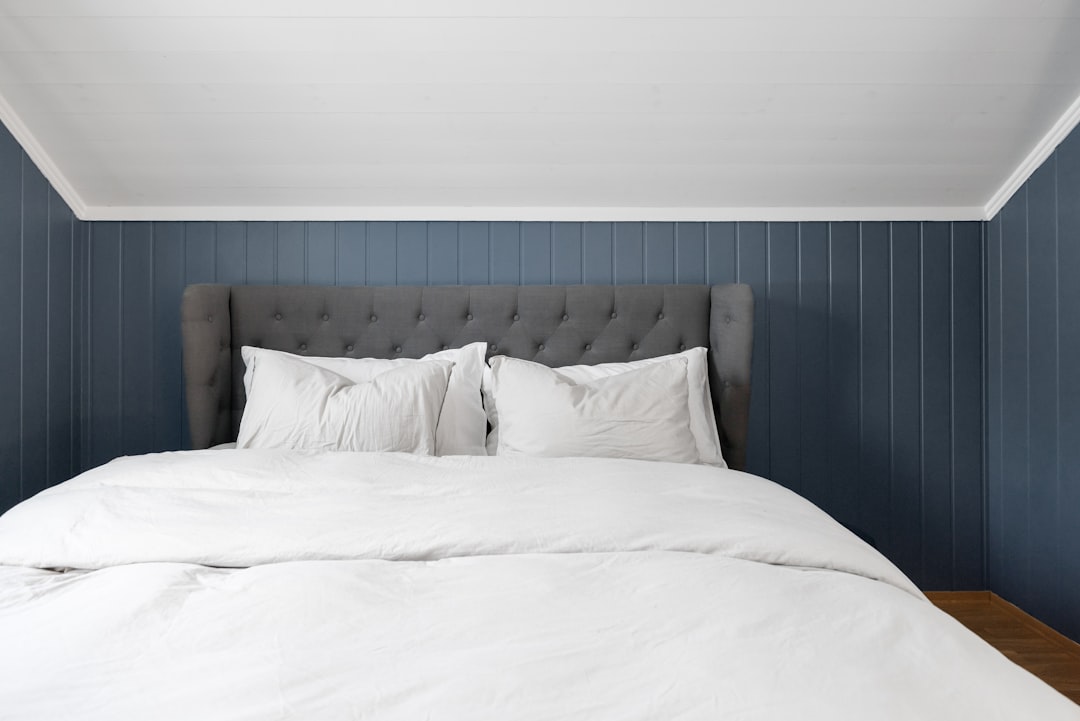
The most common mix-up we see is between a Single and a Super Single. They are not the same. A standard Single bed frame measures 91 by 190 centimetres, while a Super Single frame is a full 107 centimetres wide—that’s 16 centimetres of extra sleeping space, which is a lot more than people think. This extra width makes the Super Single a popular choice for a single adult who wants more room or a teenager whose room can’t quite fit a Queen.
Can it fit two adults? In a pinch, yes, but comfortably is another story. Two average-sized adults will be sleeping shoulder-to-shoulder with zero personal space, which is fine for a night or two when you have guests but sian for regular use. For a couple, the Queen size is the proper starting point. The Super Single’s real sweet spot is the solo sleeper who’s outgrown a Single but doesn’t have the floor space for a Queen.
Now, the frame is always bigger than the mattress—that’s how it holds the mattress in place. You’ll typically need to add about 2 to 5 centimetres to each side for the frame’s structure, sometimes more for a heavily upholstered headboard. So your 107cm mattress sits inside a frame that’s likely 112 to 115cm wide. That extra few centimetres is what you absolutely must measure for.
Which brings us to the classic HDB headache: will it fit through the door? The internal bedroom door is usually the tightest squeeze, often around 91.5cm wide. A Super Single frame, even disassembled, often has a headboard or side panel that’s wider than that. The lift door, at about 90cm, is an even bigger challenge. Many delivery crews are experts at angling furniture through, but a rigid, fully assembled frame simply cannot. Always confirm the widest piece dimension with the retailer and compare it to your narrowest doorway—with a buffer. If the numbers are too close, you’ll be looking at a staircase carry or, in worst-case scenarios, a hoist operation from the window.
That solid rubberwood frame you're eyeing? It's a beast. You'll feel the heft in the showroom when you try to shift it an inch—now imagine navigating it through a 90cm lift door and up a tight corridor to a 4-room BTO. The weight isn't just about delivery day either; it’s about every future move, every time you need to clean underneath thoroughly, or the day you decide to swap rooms. In a walk-up apartment, that weight translates directly to a hefty surcharge for stair-carrying. For a permanent fixture in a landed home, it's steady. For the renter or the first-time BTO owner who might shift in five years, that permanence becomes a genuine logistical headache.
Humidity, that one's the silent killer. Singapore's 80%+ average isn't a suggestion—it's a relentless force that tests every material over the seasons. Engineered woods like MDF and particleboard are the most vulnerable; they can swell and soften at the edges if not perfectly sealed, especially in a non-air-conditioned common bedroom. That warping might not show in year one, but by year five, you could find drawers that stick or a platform that no longer sits perfectly flat. Proper sealing is everything, and even then, it's a defensive measure, not a guarantee.
Solid kiln-dried timber, like that common rubberwood, handles the moisture far better, moving minimally with the seasons. But here's the counterpoint nobody mentions in the showroom: that stability comes with its own climate demand. A solid wood frame in a constantly air-conditioned master bedroom lives in a kind of suspended animation. Throw open the windows daily for that fresh air you crave, and you're inviting the very fluctuations that cause wood to expand and contract. It's a balancing act between preserving your furniture and living in your home.
So where does that leave you? If you're after absolute climate resilience and don't mind the weight, a well-finished solid wood frame is a solid bet. But for most HDB dwellers thinking long-term, the smarter play is often high-quality plywood. It’s the quiet achiever—stable in humidity, significantly lighter to manoeuvre, and durable enough to last the decade. The one exception? If your bedroom faces the afternoon west sun and gets that daily blast of heat. In that specific bake, even the best plywood needs protection; you’ll want a finish that can handle the dry heat as well as the damp.
You’ve checked the dimensions, you’ve visualised the layout, but there’s still one step that separates a smooth setup from a logistical headache. The most common miscalculation isn’t about the frame fitting the room’s floor plan—it’s about the frame fitting the life you live around it. That’s where a roll of masking tape becomes your most valuable tool.
Lay it out on your bedroom floor to map the exact outer dimensions of the frame you’re considering. This isn’t just about the 107 by 190cm rectangle of a Super Single. You must include the clearance for everything that interacts with it. Account for the full swing of your bedroom door, which needs a clear arc to open without hitting the footboard. Factor in the pull-out space for any storage drawers, which can add another 40 to 50cm to the footprint when fully extended. Don’t forget the breathing room for your nightstands, so you’re not squeezing sideways to plug in your phone charger.
The real test comes when you walk the space. Can you comfortably open that built-in wardrobe door? Is there still a clear path to the window or the air-con unit? In a typical 4-room BTO common bedroom, every centimetre is contested territory. A frame that technically fits can still make the room feel like a cluttered maze, turning your sanctuary into a source of daily frustration. That buffer you leave—the 60cm on the exit side, the 30cm elsewhere—isn’t wasted space; it’s the space where you actually live.
The only time you might skip this is if you’re committing to a minimalist platform frame with zero overhang and no extras, in a room you know is generously sized. But for the majority, especially with storage beds or upholstered frames that add bulk, this tape exercise is non-negotiable. It transforms numbers on a spec sheet into a tangible reality on your floor, preventing that sinking feeling when the delivery team arrives and the piece just won’t work with your layout. It’s the final, physical confirmation before you commit—your last defence against a fit that looks right on paper but feels all wrong at home.
Storage beds are practical in Singapore flats where space for luggage is scarce. Hydraulic lift-up beds need overhead clearance, while drawer beds require floor clearance. These features maximise the utility of a room that might be only 12 sqm.
Bed frame materials determine how long the frame lasts. Solid wood or plywood withstands Singapore's humidity better than particleboard, which can warp. Rubberwood is a common affordable hardwood option. Performance fabrics like Crypton resist stains better than standard upholstery.