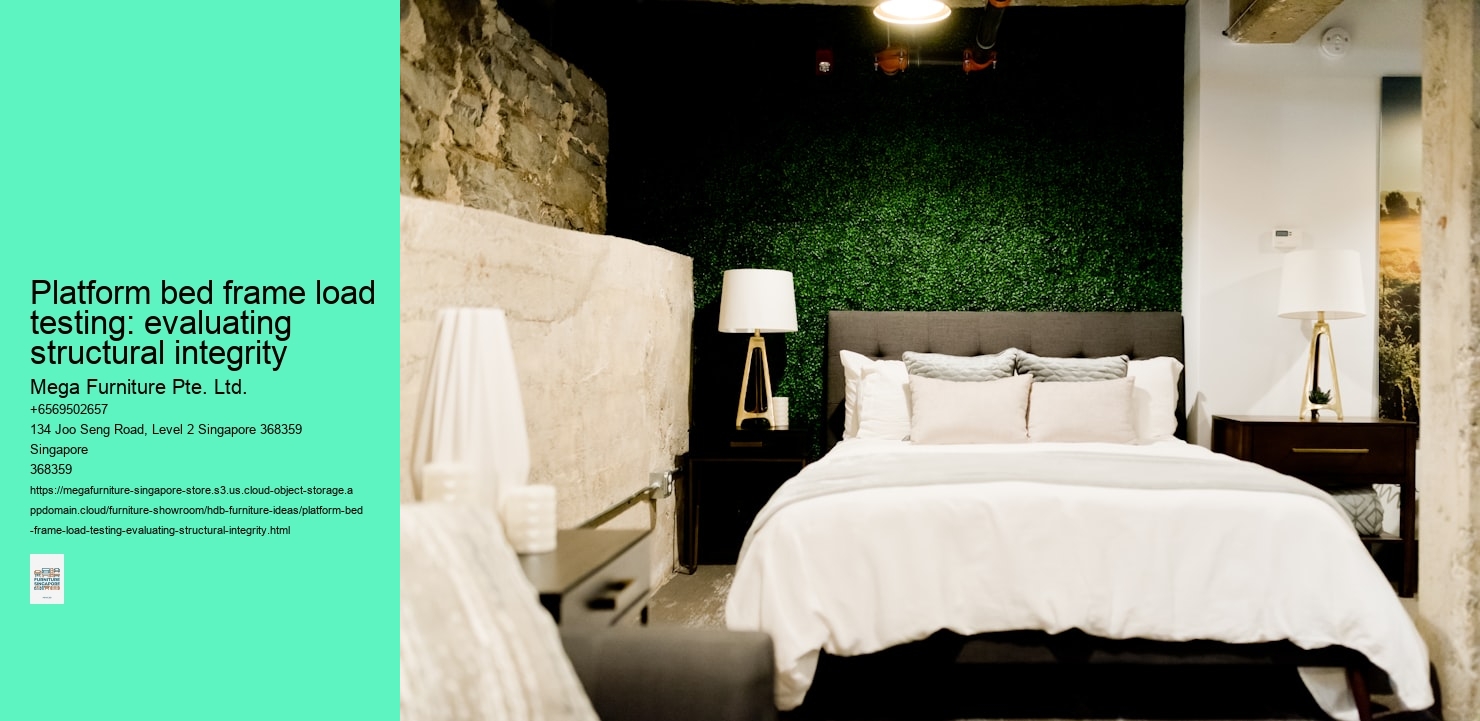
A platform bed’s advertised weight limit is the first thing you see on the spec sheet—usually a reassuring 500kg or 800kg. That figure is supposed to cover the bed, the mattress, and the people sleeping on it, which sounds more than enough for a Queen and two adults. It’s a starting point, but you can’t just take it as gospel. The real story is in how the frame achieves that number, and where the weak spots might be hiding.
Look at the joint design first. A simple butt joint glued and screwed is common, but over years of Singapore’s humidity, even kiln-dried timber can move a little. That movement puts stress on the glue line. A mortise and tenon or a reinforced corner block spreads the load better and resists that seasonal shift. Then, check the centre support. A long Queen or King frame with only perimeter legs is relying on the side rails to bear all the weight in the middle—a 152 by 190cm Queen mattress with two people creates a significant central load. A centre beam or an extra leg running down the middle stops that sagging feeling you get after a few years.
It’s not just about a catastrophic failure, either. A frame that’s under-engineered for its claimed capacity will show it gradually. You’ll notice a slight dip in the centre, maybe a creak when you shift position at night. That’s the structure flexing within its limits, but over time that flexing can loosen joints and shorten the frame’s life. For a couple in a 4-room BTO planning to use the bed for the long haul, that gradual degradation is the real worry, not a sudden collapse.
So treat the weight rating as a baseline filter. If a frame claims 800kg, ask how. Got a centre support rail or not? Are the corner joints reinforced? If the answers are vague, that rating might be more optimistic than practical. The one exception is for a Super Single in a common bedroom—the shorter span and lighter typical load mean even a simpler frame can often hold up fine. But for the master bedroom’s main bed, where you’ll spend years, the capacity number alone isn’t enough. You need to see the bones behind it.
A bed frame is the one piece of bedroom furniture you sleep on every night for years, so it's worth getting right rather than treating as an afterthought to the mattress. Shopping for a bed frame in Singapore comes down to three decisions: the size your room can take, the material, and whether you need storage built in. Sizes run from a 91cm single through to a king around 182 to 183cm — and the honest first step is measuring the room, the doorway, and the lift, since the bed has to get in before it can fit. Material sets the tone and the upkeep: wood for warmth, metal for a slim modern profile, upholstered or divan for softness. And in a compact flat, a storage frame turns the space under the mattress into the cheapest storage you'll ever add. Get those three right and the frame becomes a foundation you won't think about again for a long time..You’ll see them in the listings: those sleek, minimalist metal frames priced just a few hundred dollars. They look clean, they promise easy assembly, and the photos show a perfectly sturdy bed. But after a couple of humid seasons in a typical 4-room flat, the reality often shifts. The welds at the joints—especially around the legs and the centre support—can start to show fatigue. Bolts that seemed tight during assembly begin to loosen, leading to a persistent, faint creaking every time you shift in bed. That’s not just an annoyance; it’s a sign the structure’s integrity is compromised.
Singapore’s climate isn’t forgiving on thin, untreated steel. The constant humidity, often hovering above 80%, acts like a slow, relentless test. It doesn’t cause rust overnight, but it encourages microscopic movement at every joint. A frame that felt rock-solid in a dry warehouse will, over months in your bedroom, develop a subtle sway. You might notice it first when you sit on the edge—a slight dip that wasn’t there before. For a Queen bed holding two adults, that gradual weakening isn’t something you want to discover after five years.
The real hidden cost isn’t the initial price tag. It’s the premature replacement. Buying a bed frame isn’t like swapping out a side table; it’s a core piece you expect to last a decade. When a thin metal frame starts to fail, you’re faced with the hassle and expense of dismantling it, arranging disposal, and sourcing a new one—all while your mattress is temporarily homeless. That initial savings can vanish completely.
There’s one exception, though. If you’re in a rental and genuinely need a frame for just a year or two, a well-reviewed metal option might serve its purpose. But for homeowners, especially those in a BTO setting up for the long term, the math rarely works out. You’re better off investing in a frame built from materials known for stability here—like kiln-dried timber or quality plywood—which handle our moisture levels without that same silent deterioration. The upfront difference buys you peace of mind, and a bed that won’t start talking to you in the night.
Solid timber, especially kiln-dried rubberwood or teak, possesses a natural resistance to the seasonal shifts Singapore's humidity brings. Plywood, while engineered for stability, is a laminated composite that can react differently under sustained pressure from heat and moisture. In a west-facing bedroom, afternoon sun heats the room significantly, causing materials to expand and contract over the years. A solid wood frame handles this thermal cycling more gracefully, maintaining its structural integrity without subtle warping at the joints. Plywood's layered construction can sometimes introduce internal stress points that become apparent only after prolonged exposure. That's why a timber frame often feels more steady in the long run, even if both look identical when new.
The afternoon sun in a west-facing flat is relentless, baking a room for hours and raising the ambient temperature considerably. This heat accelerates the expansion process in any wooden material, testing its cohesion. Solid timber expands and contracts as a single, homogeneous piece, which minimises the risk of creating cracks or gaps between components. Plywood, with its glued layers, can experience differential expansion where the core and face veneers pull against each other. Over several years, this can lead to a slight but perceptible softening of the frame's rigidity, particularly around the slat system or leg joints. It's a slow process, but one that solid wood inherently counters better.
When you're considering a bed frame that will last a decade or more, the question isn't just about initial strength but how that strength degrades over time. A solid timber frame, properly constructed, tends to age as a unified block, preserving its load-bearing capacity across the entire platform. Plywood's performance hinges on the quality of its adhesive bonds and the uniformity of its layers—factors that are excellent initially but can be challenged by the local climate's constant fluctuations. In a Queen-sized platform bed, which supports considerable weight nightly, this enduring rigidity translates to a silent confidence that the frame won't develop a subtle sag or creak. For many homeowners upgrading from a basic frame, that assurance is worth the initial investment.
Singapore's humidity, often hovering around 80% or higher, is a relentless force that furniture must withstand year-round. Solid hardwood like rubberwood has a denser cellular structure that absorbs and releases moisture more slowly, leading to gradual, manageable movement. Plywood, while designed to be stable, can sometimes trap moisture between its layers if the sealing isn't perfect, a risk that increases in a poorly ventilated room. This isn't about catastrophic failure, but about maintaining a perfectly level sleeping surface that doesn't develop minor dips or twists over the seasons. For a bed frame, where even a slight unevenness can affect mattress support and sleep quality, the timber's predictable behaviour is a clear advantage.
Choosing between solid timber and plywood ultimately boils down to your view of the purchase: is it a short-term solution or a long-term foundation for your bedroom? Timber frames often carry a higher upfront cost, but they repay that investment by resisting the environmental stresses that cheaper materials succumb to gradually. Plywood offers excellent value and performance for many years, but in the specific scenario of a sun-exposed master bedroom, its lifespan might be shortened by the compounding effects of heat and moisture. If you're furnishing a first home and plan to keep the bed for the long haul, the timber route makes financial sense by avoiding a replacement cycle. The one exception is if your bedroom is well-shaded and consistently air-conditioned—then plywood's stability can indeed match timber's performance for a lower cost.


It’s easy to think a bed frame’s job is just to hold the mattress up. But when those centre support rails are too thin, or the joints aren’t reinforced, the whole structure starts to dip. You won’t see it at first—maybe just a faint creak when you shift position. Over months, that slight bend becomes a permanent sag right in the middle, where most of the weight is. Your expensive mattress, designed to last a decade, starts conforming to that bowed shape. It’s not the foam failing; it’s being forced into a curve it wasn’t meant to hold.
That’s the hidden cost of a weak frame. You’re replacing a perfectly good mattress early because the platform underneath couldn’t do its one job. In a humid climate, where plywood and solid wood stay stable but cheaper boards can soften, the risk isn’t just a noisy joint. It’s an uneven surface that wears out your bedding from below.
The fix is straightforward: look for strength in the centre. A Queen mattress spans 152 centimetres—that’s a lot of unsupported space if there’s only a perimeter frame. A good platform will have a central beam, often with additional legs or a lattice, to distribute weight evenly. It’s the difference between a mattress resting on a solid plane and one draped over a hammock. Don’t just tap the sides; ask about the support underneath the middle. Can’t see it? That’s a problem. You need to know what’s there.
Some minimalist designs skip the centre beam for a cleaner look, relying on thicker perimeter materials. That can work for a Single or Super Single, where the span is shorter. For a Queen or King, though, skipping central support is a gamble. The only time I’d consider it is if the frame uses a seriously thick, kiln-dried solid timber base—and even then, I’d want to see the load rating. For most flats, the safer bet is a frame that doesn’t leave the middle hanging.
Choosing the correct bed frame size ensures it fits your Singapore bedroom. A Queen size, 152cm wide by 190cm long, suits most HDB master bedrooms. You should leave at least 60cm clearance on one side for easy movement and access. Always measure your room and consider the lift door width, which is often the tightest access point at roughly 90cm.
Bed frame materials determine longevity in Singapore homes. Solid wood or plywood frames withstand humidity better than particleboard, which can swell over time. Rubberwood is a common affordable hardwood option, offering durability without the cost of premium teak. High-density foam in upholstered frames retains its shape far longer than cheaper, softer alternatives.
The firmness rating printed on a mattress tag tells you almost nothing about how it’ll actually feel on a particular frame. You can buy a medium-firm mattress expecting gentle contouring, only to find it feels rock-solid once it’s laid on a rigid platform base. That’s because the support underneath changes everything—the mattress isn’t floating in space, it’s interacting with the surface below. A slatted base with flexible wood offers a bit of bounce, while a solid platform made from thick plywood or metal provides zero deflection. The mattress alone can’t compensate for that. So judging a mattress on its own, in a showroom where it’s sitting on a soft, carpeted floor or a different base, is a bit like tasting a sauce without the main dish.
This is why you need to test the paired setup. If you’re considering a platform bed from a retailer that also makes its own mattress line, you’ve got a rare chance to experience the complete system. Head to their showroom and ask to see a mattress placed on the exact frame you’re eyeing. Don’t just press your hand into it; lie down. Spend a few minutes on your back, your side, the way you actually sleep. The difference between a mattress on a plush floor and one on a firm platform can be startling—what felt cushioned might now feel unyielding. That’s the interaction you’re assessing.
Some might say you can just buy the frame and mattress separately later, figuring you’ll adapt. But that’s a gamble. You’re committing to a frame that dictates the feel for years, and then hoping a future mattress purchase will somehow match it. If it doesn’t, you’re stuck with a bed that never feels right, or you’ll end up spending more on a topper or a second mattress to correct it. The only time I’d skip this paired test is if you’re dead certain you’ll use a separate, standalone mattress base on top of the platform frame—but then you’re paying for two structures.
So make the trip. It’s a straightforward step that cuts through the guesswork. You’ll know immediately if the combined support is too hard for your joints or if it’s the perfect balance of stability and comfort. That final, real-world feel is what you’ll wake up to every morning for the next decade, not the isolated specs on a label.
" width="100%" height="480">Platform bed frame load testing: evaluating structural integrity
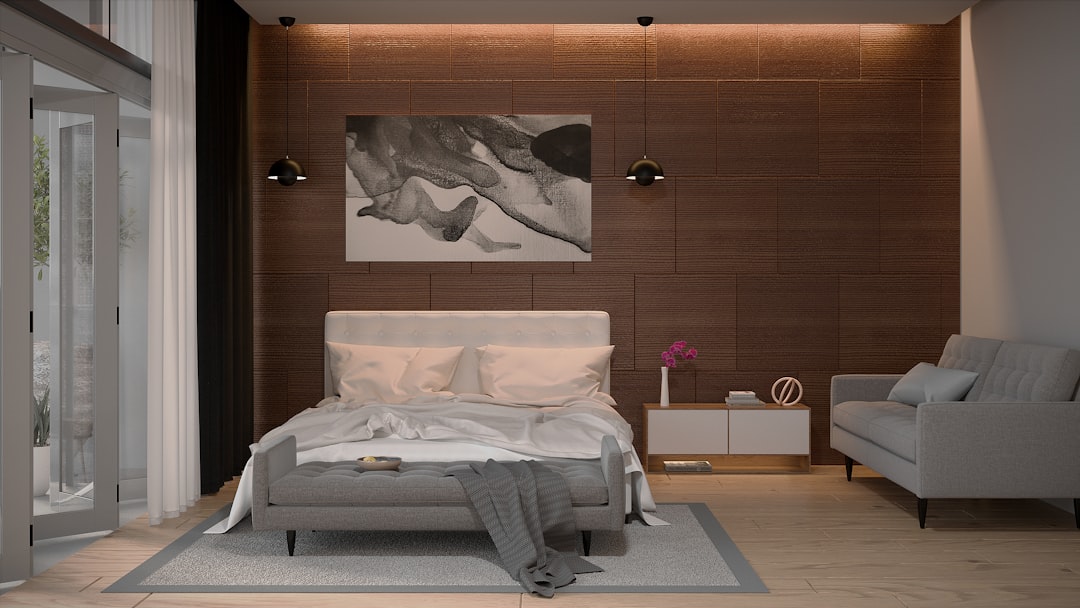
A Queen platform bed's weight limit isn't a single number stamped on the frame—it's a conversation between the material and the design. Solid wood or kiln-dried hardwood frames can hold significantly more than particleboard ones, but the real test is the joinery and the number of central supports. A well-built frame with robust legs and a solid centre rail can handle the combined weight of two adults plus the mattress without a second thought, while a cheaper design with fewer supports might start to complain over time. You'll want to look for a frame that doesn't just feel sturdy when you push on it in the showroom, but one that has a logical, reinforced structure underneath.
Does humidity weaken wooden frames over the years? It can, but not all wood reacts the same way. Solid timber will naturally expand and contract with the moisture—that movement itself isn't failure, it's just the material breathing. The risk comes from prolonged exposure in a poorly ventilated room, where constant high humidity can encourage mould or, in cheaper plywood and MDF constructions, cause the material to soften and swell at the joints. A kiln-dried hardwood frame in a bedroom with decent airflow will stand up to our climate just fine; it's the budget options using untreated particleboard that you need to worry about.
Listen for a creak that's rhythmic and persistent, not the occasional sound when you shift position. A consistent groan or squeak from a specific joint, especially one that gets louder, often points to a fastener working loose or a structural member starting to flex beyond its tolerance. That's the noise you don't ignore. A sharp cracking sound is an immediate red flag—it usually means something has given way.
Adding weight after purchase, like upgrading to a heavier mattress or storing more items in a lift-up base, isn't automatically a problem if the frame was built with a margin of safety. But you can't just assume it'll cope. Check the original specifications if you have them, and consider the cumulative load: the frame, the new mattress, two people, and maybe those boxes of winter clothes you're stashing underneath. If the frame was already at the edge of its stated capacity, adding more is a gamble. The one time I'd say go ahead is if you bought a seriously over-engineered solid wood frame from the start—those often have the reserve strength to take on a bit more.
The showroom floor is a minefield of temptation, where a handsome frame can distract you from whether it’ll actually fit your room. That’s why your first move shouldn’t be browsing online—it’s gathering your own hard numbers. Pull out your floor plan and measure your bedroom’s exact dimensions, including the clear walking space around the bed. For a typical 12 sqm HDB common bedroom, a Queen bed at 152 by 190cm might already eat up most of the floor, leaving you with just a narrow corridor to the wardrobe. You’ll want at least 60cm clearance on the side you exit from, so jot that down.
Next, dig up your mattress specs. If you’re keeping your existing mattress, note its exact length and width—some premium models run longer than the standard 190cm, and a frame that’s a few centimetres short will leave you with an awkward overhang. If you’re buying a new mattress alongside the frame, decide on its size first and treat that as your fixed datum. Don’t assume all “Queen-sized” frames are identical; internal support dimensions can vary.
Then, consider the weight it’ll need to bear. This isn’t just about the mattress weight—add a realistic estimate for the people using it. A couple’s combined weight, plus any kids who might jump on it, gives you a rough load figure. A frame rated for a static load might not handle the dynamic stress of actual use over years. Bring these three numbers—room dimensions, mattress size, and estimated weight—with you to the showroom. They’re your anchor against sales talk about aesthetics or trendy features.
The exception? If you’re certain you’re moving to a larger space within a year or two, you might temporarily tolerate a frame that cramps your current room. But that’s a calculated trade-off, not an oversight. For most buyers in Singapore’s compact flats, sticking to your specs means you won’t end up with a beautiful bed that simply doesn’t work.