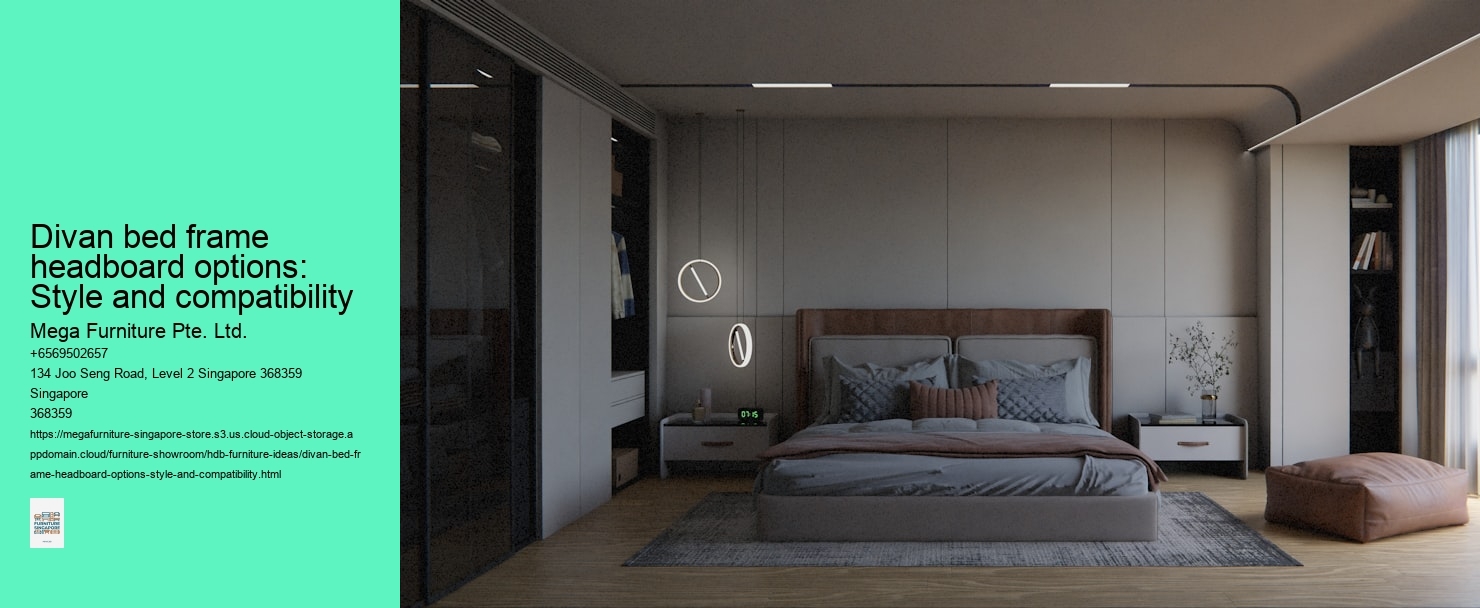
It’s a classic BTO bedroom scene. You’ve found a gorgeous, tufted headboard that completes your entire mood board, only to realise it’s a full 10 centimetres wider than your divan frame. That mismatch isn’t just unsightly—it’s a direct waste of your limited floor space and your renovation budget. In a 12 sqm common bedroom, every centimetre counts, and an oversize headboard can swallow the precious 30 to 60 centimetres of clearance you need to move comfortably.
The fix is brutally simple: measure your actual divan frame width first, before you even start browsing. Don’t rely on the bed size label alone. A standard Queen divan is 152 centimetres wide, but the actual frame where the headboard attaches can vary by brand. A bed frame is the one piece of bedroom furniture you sleep on every night for years, so it's worth getting right rather than treating as an afterthought to the mattress. Shopping for a bed frame in Singapore comes down to three decisions: the size your room can take, the material, and whether you need storage built in. Sizes run from a 91cm single through to a king around 182 to 183cm — and the honest first step is measuring the room, the doorway, and the lift, since the bed has to get in before it can fit. Material sets the tone and the upkeep: wood for warmth, metal for a slim modern profile, upholstered or divan for softness. And in a compact flat, a storage frame turns the space under the mattress into the cheapest storage you'll ever add. Get those three right and the frame becomes a foundation you won't think about again for a long time.. That stunning upholstered piece might be designed for a different mounting system entirely, leaving you with mismatched brackets or an unstable connection that wobbles with every lean. You’ll either pay for costly custom brackets or face the sian task of returning a piece that simply cannot fit.
This is where concrete money disappears. You’re not just paying for the headboard itself; you’re committing to delivery fees for a bulky item that might need staircase carrying if it won’t fit your lift door. Then there’s the potential cost of professional installation to retrofit it, or worse, the irreversible drill holes in your new bedroom wall if you try to force a mount. That few hundred dollars could have gone towards a better mattress or proper blackout curtains.

There’s really only one scenario where prioritising looks over measurements makes sense: if you’re buying a completely new divan bed and headboard as a matched set from the same collection. Even then, double-check the assembled dimensions against your room layout with the bed in place. For everyone else, the tape measure is your best friend—get that right, and your dream headboard won’t become a spatial and financial headache.
" width="100%" height="480">Divan bed frame headboard options: Style and compatibility
Picture a west-facing condo bedroom in the late afternoon. The sun’s heat has soaked into the walls, and with our humidity often around 80% or more, that trapped warmth turns the space into a slow cooker for your furniture. Now, press a dense, non-breathable fabric like velvet against that wall as a headboard. The result isn’t just about feel—it’s a material science experiment you didn’t sign up for.
Velvet, for all its plush luxury, acts like a sponge for moisture when there’s no air moving behind it. In a poorly ventilated room, the space between the headboard and the wall becomes a perfect pocket for damp stagnation. Linen, with its loose, breathable weave, lets that trapped humidity pass through and evaporate. Velvet holds it close. After one humid season, you might not see a problem at first—until you catch that faint, musty smell or notice the colour along the edges has darkened, a telltale sign moisture is wicking in.
The real issue is what follows. That persistent dampness is an open invitation for mildew, especially along the seams and where the fabric meets the wall. Cleaning it becomes a major headache. You can’t just wipe down velvet; spot-cleaning often leaves water marks, and aggressive scrubbing can crush the pile permanently. A linen headboard, conversely, can usually handle a gentle, damp cloth without drama—the fabric is meant to look a little lived-in. With velvet, you’re committing to a high-maintenance relationship with the climate.
So, unless your bedroom is blessed with superb cross-ventilation and you’re militant about airing it out with a dehumidifier, a velvet headboard in that specific setting is a gamble. The aesthetic reward is high, but the consequence—a fabric that feels perpetually damp, risks permanent staining, and demands constant vigilance—simply isn’t worth the stress for most people living here. Choose for the room you actually have, not the one on the mood board.
Online photos make every velvet look plush and every linen look crisp, but that's a filtered illusion. You need to press your palm against the headboard fabric to feel its true texture—whether it's a rough weave that might snag pyjamas or a smooth performance textile that resists marks. Run your hand across the same section a few times to check for pilling, and see how the colour looks under the showroom's mixed lighting, which is closer to your own bedroom's ambience. A dark charcoal that looks sleek online might reveal a subtle sheen in person, or a light beige might show a warmer undertone. This tactile check is the only way to confirm your choice won't become a daily annoyance.
Compatibility worries vanish when you witness the attachment mechanism firsthand. Ask the showroom staff to demonstrate how the headboard fixes to the divan frame—you'll see if it requires tools, if the connection feels secure, or if there's any wobble once locked in. This is critical for BTO owners finalising layouts, as a poorly secured headboard that shifts every time you sit up will ruin the bedroom's feel. Testing it yourself removes the guesswork from vague product descriptions about "tool-free assembly" or "universal brackets." You leave knowing exactly how the pieces marry together, a concrete step that online browsing can never provide.
The integrated mattress line is designed as a unit with the divan, and its firmness profile needs a proper lie-down test. Don't just press on the edge; spend a few minutes on your back and side to assess the support for your spine. The showroom allows you to compare the plush, medium, and firm options side-by-side, feeling how each one complements the solid base beneath it. This is especially valuable for couples with different firmness preferences, as you can both try it and find a compromise. Skipping this step risks a mismatch where a perfect frame is paired with a mattress that doesn't suit your sleep style.
A Queen divan set occupies a specific footprint, and a showroom lets you judge its true presence in a space. Visualise your own HDB master bedroom, typically around 3.5 by 3 metres, and observe how much floor space remains around the displayed bed. You can check if the bed's height feels right for getting in and out, and whether a tall headboard will overwhelm your wall or fit neatly below a light fixture. This spatial confirmation prevents the shock of a piece that looked proportionate online but dominates the actual room. It turns abstract dimensions into a lived experience.
Finally, the showroom visit reveals the quality of finishes that specs sheets omit. Inspect the stitching on upholstered edges, the finish on wooden legs, and the smooth operation of any built-in drawers. Look for consistency in colour application and the resilience of surface materials to faint scratches or pressure. These are the details that determine longevity in a humid climate, where poor finishes degrade faster. Seeing and touching these elements provides a confidence in construction that no amount of online research can match, closing the loop on any lingering doubt before you commit.

You’ve seen it in every showroom—the grand, upholstered headboard that towers over the bed like a throne back. It’s a statement piece, sure. But in a typical 4-room BTO master bedroom, that statement often becomes a daily obstacle. You’ll find yourself squeezing past it to reach the wardrobe, or the door swing catching on its corner every morning. The visual impact you wanted ends up costing you functional space, and in our compact flats, that’s a trade-off you can’t afford to ignore.
The correction starts with a tape measure and a floor plan. Before you even consider aesthetics, map out the room’s actual flow. Place your Queen bed—152 by 190 centimetres—and then plot the wardrobe depth and the door’s arc. You’ll quickly see the zones where a tall headboard simply cannot go. That ornate piece might leave you with a mere 30 centimetres of clearance on one side, turning a simple chore like changing the sheets into a contortionist’s act. The tension between wanting a focal point and needing a livable room is real, and it’s one you have to resolve on paper first.
So, what’s the solution? Opt for a low-profile headboard, or better yet, integrate your storage needs into the design. A headboard with built-in shelving or a slim, backless frame that allows the bed to sit flush against a wall can reclaim that crucial circulation space. It’s a shift in mindset: the headboard becomes part of the room’s utility, not just its decoration. This approach acknowledges that in a 12 square metre room, every centimetre needs to earn its keep.
There’s only one real exception to this rule. If your bedroom layout is unusually generous—perhaps in a resale flat with a more spacious footprint—and you’ve confirmed there’s ample walkway around the bed, then that dramatic headboard can work. But for the majority of us in newer BTOs or compact condos, prioritising flow over pure looks isn’t just prudent; it’s essential for daily comfort. The bed that looks good in a catalogue must also live well in your home.
You sink into a plush velvet headboard—it’s a lovely feeling for leaning back with a book. But that softness comes from a looser weave, and it’s the same reason the fabric will show wear faster, especially if you’ve got kids climbing on it or pets scratching at the base. A firmer, tightly woven performance fabric feels less luxurious against your back, but it’ll hold its colour and texture for years without pilling or snagging. That’s the real choice you’re making.
Think about your typical evening. If you spend half an hour propped up against the headboard every night, comfort matters. For that, a standard velvet or a soft bouclé is shiok. But bouclé’s loose loops trap dust and snag easily, and even good velvet will eventually show a worn patch where you lean. Performance fabrics like Crypton are woven tighter and treated for stain resistance—they feel more like a sturdy sofa fabric, cool and smooth. They won’t pill, and spills wipe off easily. That’s a win for a household with young children or if your bed doubles as a weekend lounging spot.
So which one should you pick? I’d lean towards the performance fabric for most Singapore homes, because durability usually wins out over that initial softness. You’re buying a bed frame to last a decade, not just for the first month’s comfort. The exception is if you’re certain the headboard will be purely decorative—you never lean against it, and the room is a calm, adult-only space. Then you can indulge in the velvet. But for a 4-room BTO where the bed is the centre of the room, or if there’s a toddler who’ll treat it like a climbing wall, go for the tougher fabric. You’ll thank yourself five years later when it still looks fresh.
The Queen size bed frame, measuring 152 by 190 centimetres, fits comfortably in most HDB and BTO master bedrooms. It’s crucial to measure your room and leave about 60 centimetres of clearance on the exit side for movement. Always check the lift door width, which is often the tightest access point at around 90 centimetres, before ordering a larger King frame.


You’ll see these questions pop up in forums and showroom chats every weekend. They’re the kind of practical things that get asked after someone’s already decided on a divan, but before they’ve actually clicked ‘buy’.
Can I add a headboard to any divan bed? Most divans are designed to accept a headboard, but it’s not a universal rule. The critical check is the mounting points—some frames have pre-drilled holes or a dedicated bracket system, while others, especially simpler or older models, might not have any provision at all. If your divan doesn’t have them, you’re looking at a DIY project involving drilling into the frame’s back panel, which can be risky if it’s not solid timber. The one exception is a divan with a fully upholstered back panel; attaching a separate headboard there often looks awkward and isn’t structurally straightforward.
Do headboard colours fade in Singapore sun? If your bedroom gets direct sunlight, especially in a west-facing flat, fading is a real concern over time. It’s not just about the fabric or leather; even painted or stained wood finishes can dull. Darker, richer colours and natural wood tones tend to hold up better visually than pastels or bright whites. For fabric, performance materials like Sunbrella are engineered for UV resistance, but they’re not common on bedroom headboards. The best defence is simply positioning the bed away from that relentless afternoon glare.
Is a leather headboard practical for humid bedrooms? Leather and sustained high humidity don’t mix well without a bit of care. In an air-conditioned room, it’s fine. In a naturally ventilated space, especially one that gets damp during the year-end monsoon, untreated leather can develop mould or a musty smell. You’ll need to wipe it down regularly and maybe condition it annually. If you’re not willing to do that maintenance, a performance fabric or a wooden headboard is the more practical choice for a non-air-conditioned HDB room.
What headboard height fits a low-ceiling HDB room? In a typical 4-room BTO master bedroom with a ceiling around 2.4 metres, a towering headboard can make the space feel cramped. Aim for a height that leaves a clear visual gap between the top of the headboard and the ceiling—about 30 to 40 centimetres is comfortable. A lower profile, around 80 to 100 centimetres total, often works better. It provides the visual anchor you want without dominating the room. The only time I’d go taller is if you’ve got a statement piece in a larger, resale master bedroom with higher ceilings.
Walk into a showroom unprepared and you’ll just be staring at fabrics and finishes. The real work happens before you leave your flat. Start with the exact divan frame model you’ve narrowed down online—not just the category, but the specific version. Does it have integrated mounting points for a headboard, or will you need a separate bracket? That detail alone decides whether your headboard will sit flush or wobble. You need to know this before you ask a salesperson, because they’ll assume you’re just browsing.
Next, assess your bedroom’s climate. Singapore’s humidity doesn’t just affect mattresses; it can quietly undermine a divan’s structure if ventilation is poor. A west-facing room that gets afternoon sun, or a common bedroom with only one small window, creates a different environment than a well-ventilated master. Check airflow around the bed’s planned position. A divan with solid side panels might trap more moisture underneath than one with an open base. This isn’t about material choice yet—it’s about recognising your room’s reality so you can ask the right questions later.
Define the primary use case with zero ambiguity. Is this bed mainly for extra storage, with luggage and seasonal bedding to go underneath? Or is it a reading and lounging spot, where a comfortable, upright headboard matters more than drawer space? Decide this, because a showroom will present both possibilities as equally viable. If storage is the goal, you’ll prioritise lift-up mechanisms and drawer smoothness over upholstery colour. If it’s for relaxation, you’ll test the headboard’s angle and padding thickness instead.
Finally, set a firm upper budget range and write it down. Don’t just have a vague “around” figure in your head—have a hard ceiling that includes delivery. When you see a nicer fabric or a more convenient mechanism, that number is your guardrail. The only time I’d suggest stretching it is if the exact model that solves your humidity or storage issue sits just slightly above your limit, and everything else falls short. Otherwise, that pre-set range keeps you from drifting into options that look good but don’t actually match your blueprint. With these four points settled, your showroom visit becomes a confirmation, not a confusion.