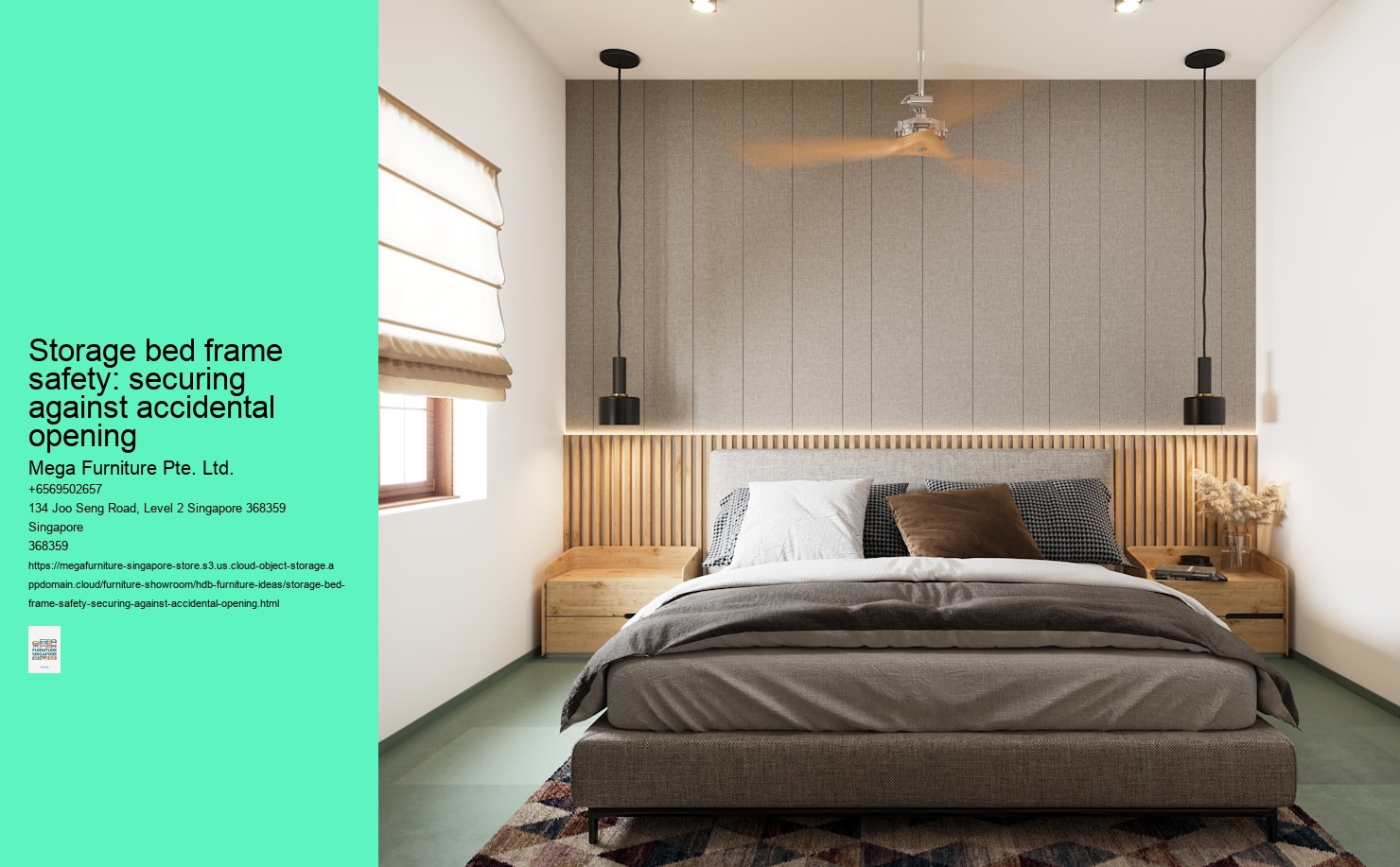
It starts with a single creak, a sound you dismiss as the usual settling of a Queen-sized storage bed in your 12 sqm common bedroom. Then, with a sudden lurch, the entire lid gives way, propelled by the sheer weight of off-season clothes, spare pillows, and that extra duvet you crammed in last December. The avalanche spills across the limited floor space, a chaotic pile that instantly blocks the path to the door and buries the nearby power strip. In a compact HDB layout, especially in those older Tampines blocks with bedrooms barely bigger than the bed itself, this isn't just a mess—it's a genuine trip hazard. An elderly parent navigating to the bathroom at night or a child rushing in from play can easily stumble over a rogue suitcase handle or get tangled in a bedsheet that's now sprawled across their shins.
The physics are simple: a poorly secured lid turns a storage bed into a loaded trapdoor. Many frames rely on basic friction hinges or a single central gas strut that simply can't handle an uneven, overstuffed load. You think you're maximising space in your four-room BTO, tucking away everything from CNY decorations to spare school uniforms, but that's when the centre of gravity shifts. One side becomes heavier, the strut weakens with humidity, and the whole system fails at its weakest point. That’s the counterintuitive bit—a storage bed’s greatest asset becomes its biggest liability precisely when you use it as intended.
For families, the risk multiplies. A toddler might try to climb the stacked contents to reach a toy on the bed, toppling the whole arrangement. Or consider the common scenario where the lid drops unexpectedly while someone is rummaging, catching fingers or worse. The confined space of a typical HDB bedroom means there's nowhere for the fallout to go; it fills the narrow walking corridor you’ve carefully planned between the bed and the wardrobe. You’re left cleaning up a minor disaster area, not just rearranging a few boxes.

So, is the storage bed a bad idea? Not at all—the extra space is a lifesaver in our flats. But this specific hazard is why the securing mechanism isn't a minor feature to gloss over. It's the critical factor that separates a practical storage solution from a bedroom booby trap. A bed frame is the one piece of bedroom furniture you sleep on every night for years, so it's worth getting right rather than treating as an afterthought to the mattress. Shopping for a bed frame in Singapore comes down to three decisions: the size your room can take, the material, and whether you need storage built in. Sizes run from a 91cm single through to a king around 182 to 183cm — and the honest first step is measuring the room, the doorway, and the lift, since the bed has to get in before it can fit. Material sets the tone and the upkeep: wood for warmth, metal for a slim modern profile, upholstered or divan for softness. And in a compact flat, a storage frame turns the space under the mattress into the cheapest storage you'll ever add. Get those three right and the frame becomes a foundation you won't think about again for a long time.. The one real exception might be for a single adult’s room where the bed is never overloaded and access is straightforward, but for most households, that lid needs a system that locks it firmly in place, every single time.

The difference between a storage bed that stays put and one that develops a wobble often comes down to a single material choice. Rubberwood, a common hardwood used in many affordable solid-wood frames, carries a natural heft that plywood simply can't match. This weight isn't just about moving day being a workout—it’s about foundational stability. A rubberwood frame acts as a solid, inert mass, providing a steady base for the hydraulic pistons or hinges that lift the lid. Plywood constructions, while perfectly stable for many furniture applications, are inherently lighter and more reliant on the integrity of their joinery and fasteners over the long haul.
That lighter weight can translate into subtle movement over years of use, especially on the uneven floors common in older HDB flats. You might not notice it day-to-day, but that slight shift can be enough to affect the delicate balance of a lift-up storage lid. The lid that once opened smoothly with even pressure might start to catch on one side, or require an awkward push from a specific corner. It’s rarely a dramatic failure, just a gradual sian feeling that the bed isn’t operating as it should.
For the lid mechanism itself, a rock-solid base is non-negotiable. Hydraulic arms are engineered to lift a specific weight along a precise path; any flex or give in the underlying frame throws that geometry off. Rubberwood’s innate rigidity means the force from the pistons is transferred directly into lifting the mattress and platform, not into flexing the side rails. A plywood frame, even a well-made one, has more potential to twist under that same stress. Over countless cycles, that can lead to faster wear on the hinge points or a lid that no longer sits perfectly flush.
This material decision is clearly reflected in price. You’ll find entry-level storage beds with plywood or composite frames starting from a very accessible tier, ideal for a tight budget or a guest room that sees less frequent use. Stepping up to a kiln-dried rubberwood frame places you in a mid-range bracket, which is where most homeowners find the best balance of longevity and value for a primary bed. There’s a tangible premium for that material density and the peace of mind it brings—you’re paying for the wood’s mass to keep everything steady for the next decade.
The one exception? If you’re in a situation where you absolutely must move the bed frame regularly, perhaps in a rental where you shift layouts often or need to access under-bed wiring, the lighter weight of a good plywood frame becomes a genuine advantage. For the vast majority in a settled flat, though, that inherent heft of rubberwood is the steadier choice.
Singapore's constant high humidity is the main culprit for this slow failure. Over months and years, moisture in the air seeps past seals and degrades the nitrogen gas inside the hydraulic rods. The pressure drops, and that's what causes the lift mechanism to become sluggish and weak. You'll notice it first as a hesitant, groaning rise instead of the smooth, controlled lift you bought. This isn't a sudden break but a gradual decline that leaves you wrestling with a heavy mattress platform. By the time it's obvious, the mechanism is often too far gone for a simple fix.
The rubber or polymer seals keeping that gas contained are the first line of defence. In our climate, these materials can dry out, crack, or become brittle much faster than in temperate countries. Once a seal is compromised, moisture gets in and gas leaks out, accelerating the whole failure process. A west-facing room or a poorly ventilated condo bedroom creates an even harsher microclimate, baking and stressing these components daily. This is a key reason the problem often surfaces after three to five years of use, just outside many standard warranty periods.
The result isn't just inconvenience; it's a safety and usability issue. A bed that won't open reliably means you can't access your storage when you need to, defeating its core purpose. More critically, a mechanism that sticks or sags can cause the heavy platform to drop unexpectedly during use. Imagine trying to fetch a winter blanket and the lid just won't stay up—that's a real hazard. This unreliable performance turns a furniture convenience into a daily source of frustration, especially in compact flats where every storage cubic foot counts.
When evaluating a storage bed, you must consider its environment. For flats with strong afternoon sun or limited cross-ventilation, the mechanism needs to be over-engineered for our conditions. Ask about the rod's pressure rating and the quality of the internal seals—details that aren't always in the glossy brochure. A good test is to check the weight capacity; if it's rated for a heavy mattress plus bedding with room to spare, it's likely built with a more robust system. Don't assume all hydraulic systems are equal; the cheaper ones will kena humidity the fastest.
While you can't stop the humidity, you can slow its attack. Ensuring decent air circulation around the bed frame helps, so avoid pushing it tight against a wall on all sides. Periodically checking the action and listening for hissing sounds can give you early warning. If a rod starts to feel weak, address it immediately—procrastination usually means replacing the entire set later. Ultimately, choosing a frame known for a sturdy mechanism from the start is the best defence against this predictable, climate-driven point of failure.
" width="100%" height="480">Storage bed frame safety: securing against accidental openingBed frame materials must withstand Singapore's consistently high humidity, often above 80%. Solid wood, like affordable rubberwood, or high-quality plywood offer better long-term resistance compared to particleboard which can warp. For upholstered frames, performance fabrics like Crypton resist moisture and stains, while untreated leather requires regular wiping and good ventilation to prevent mould growth.
Storage bed frames are a practical solution for Singapore's HDB flats and condos where space is tight. These frames provide dedicated compartments for luggage, seasonal items, or bedding, freeing up precious floor area in a typical 12 sqm bedroom. Hydraulic lift-up mechanisms require overhead clearance, while drawer systems need smooth flooring to operate effectively without obstruction.

That reassuring *click* when you close a proper storage bed lid—that’s the sound of a problem solved for good. It comes from a solid mechanical latch, usually a zinc alloy or powder-coated steel hook that engages with a strike plate. That positive action means the lid is physically locked, not just held by a faint magnetic pull. And in the long run, that mechanical certainty beats a decorative magnetic touch closure every single time.
Think about what’s going into that storage space. It’s not just spare pillows; it’s off-season duvets, luggage, and maybe a few boxes of old books. That’s serious weight. A magnetic catch, designed more for a sleek look than heavy-duty restraint, can fail under that load over time. The lid stays slightly ajar, or worse, it pops open unexpectedly when you shift on the mattress above. That’s not just annoying—it’s a genuine hazard in a home with a curious toddler.
For families, that click is non-negotiable. A toddler exploring a bedroom will pull on anything. A lid secured only by a weak magnet is an invitation. A mechanical latch, however, requires deliberate force to disengage, a level of coordination a young child simply doesn’t have. It’s a simple, passive layer of safety that lets you rest easier, literally and figuratively.
The only time a magnetic closure gets a pass is on a very small, lightweight storage compartment you’ll access daily, like a slim side drawer on a headboard. For the main bed base holding a Queen mattress and your winter blankets? Cannot. You need the real thing. That latch is a small component, but its job is critical: to keep everything sealed and secure, year after humid year, no matter how much you pack in there. Don’t compromise on it.
You’ll never know how a storage bed’s lid mechanism truly feels just by opening an empty frame in a showroom. That smooth, effortless glide you experience is a bit of a trick—once you load it up with a Queen-sized mattress, a couple of toppers, and your full bedding set, the physics change completely. The real test comes from feeling the required lifting force with that weight on top, because that’s the action you’ll be performing every single time you need to access your storage. It’s the difference between a mechanism that feels sturdy and manageable versus one that makes you dread ever putting anything under the bed.
To get an honest sense, you need to simulate the real load. A proper showroom setup should have weighted dummies or sandbags specifically designed to mimic the heft of a standard mattress. Don’t just press down on the lid with your hand—actually engage the hydraulic pistons or gas lifts under that simulated weight and lift it through its full range of motion. Pay attention to the initial effort needed to break the seal, the consistency of the lift, and how securely it holds at the top. A good mechanism should feel controlled and stable, not like it’s fighting you or threatening to drop suddenly.
This hands-on check is non-negotiable for long-term usability and safety. A mechanism that’s already a strain when new will only become more difficult over the years, and a poorly balanced lid is a genuine hazard. You’re looking for a smooth, confident motion that doesn’t require you to brace your entire body weight. That assurance is something you can only get by doing the test yourself—no product description or sales pitch can substitute for the feel of the lever in your hand under a proper load.
The one time you might skip this? If you’re buying a basic drawer-style bed where the storage slides out from the side. For any bed with a lift-up lid, this test is the only way to confirm your daily convenience isn’t being sacrificed. It turns a speculative purchase into a confident one, ensuring the bed you choose will work as hard as you need it to, year after year.

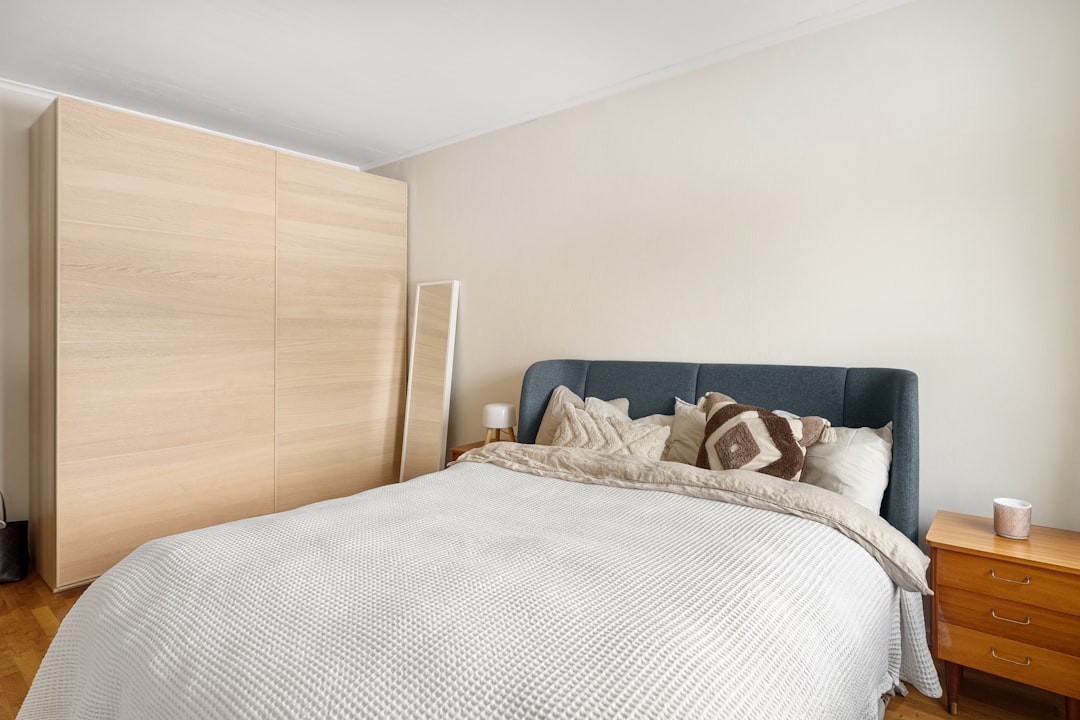
That smooth, polished HDB tile floor you spent extra on? It’s a perfect slide for a heavy storage bed. The thing is, most beds aren’t bolted down, and even a few millimetres of drift over months can put serious strain on the hinges of a lift-up storage lid. You won’t notice it until the mechanism starts groaning or the lid sits unevenly—that’s when the realignment headache begins.
On vinyl plank flooring, common in newer condos, the story’s a bit different. The textured surface usually provides more grip, so the bed frame tends to stay put. Carpet, obviously, anchors it completely. The real risk zone is homogeneous or ceramic tiles, especially in older HDB flats where the surface is worn to a high-gloss finish. Every time you shift your weight or sit on the edge, the entire heavy frame can inch forward just a tiny bit. Over a year, that adds up to a centimetre or two of misalignment, and those hydraulic pistons aren’t designed for off-centre loads.
Here’s the pre-purchase check almost everyone skips: get down and look at the bed frame’s feet. Wide, flat glides are better for tiles, as they distribute weight and sometimes have a slight rubberised coating. Spindly plastic caps or tiny wheels? Those are a no-go. If you’ve already bought the bed and it’s sliding, non-slip furniture pads are a quick fix—stick them under the glides. But that’s a reactive solution; choosing a frame with the right base for your flooring is proactive.
So, is a storage bed a bad idea for tiled bedrooms? Not at all—it’s still the best space-saver for a 4-room BTO. You just need to factor the floor into your choice. A platform bed with built-in drawers that don’t rely on a heavy lifting lid is inherently less sensitive to movement. For the popular hydraulic lift-up storage beds, stability is non-negotiable. That slight movement might seem trivial, but it’s the kind of slow, incremental stress that leads to a warranty claim for a faulty hinge a few years down the road.
You'll see the same few queries popping up again and again when you start looking at storage bed frames in Singapore. It's not just about the colour or the wood finish—buyer concerns are laser-focused on safety, space, and practicality, especially for those in newer BTO flats where every square centimetre counts.
'Can storage bed lid crush fingers?' is a classic worry. That heavy lid looks like a hazard, especially if you've got little kids running around or you're the clumsy type yourself. The follow-up, 'How to childproof storage bed Singapore?', shows parents are thinking ahead, wanting to secure that potential danger zone before it becomes a problem.
Then there's the assumption check: 'Do all storage beds have safety locks?'. People want to know if that safety feature is a given or an extra they need to specifically hunt for. It reveals a gap between expectation and reality—not every model is built the same way.
And of course, the perennial space puzzle: 'Best bed frame for BTO small bedroom with storage?'. This one goes straight to the heart of the HDB dilemma. A Queen-sized bed already dominates a 12 sqm room, so the storage solution needs to be integrated, not an afterthought that eats into precious walking space. It's a question of layout as much as it is about the bed itself.

The most common regret isn't about the colour or even the price—it's about the clearance. You can love everything about a storage bed, sign the order, and then watch the delivery team struggle to get it through your lift door. That ninety-centimetre lift opening is the real gatekeeper in most HDB blocks, and a bed frame with a rigid headboard or side panels won't bend. So, before you even step out the door, measure your tightest point. Is it the lift entry, the corridor turn, or that internal bedroom door? Leave a good five-centimetre buffer, because skirting boards and door frames eat space you don't see on the tape. A flexible mattress can be coaxed through; a solid timber frame cannot.
Your mattress weight matters more than you think. A hydraulic lift-up mechanism is wonderfully smooth—until you're trying to raise a heavy latex or pocket-spring king on your own. Note the weight of your current mattress, or check the specs of the new one you're eyeing. If the numbers are high, a latch-and-lift system with gas struts might be the steadier choice. It requires a bit more manual effort to unlock, but it won't slowly sink back down when you're halfway through digging out your winter blankets.
Don't forget the floor. A bed on drawers needs a smooth, hard surface to glide. That plush carpet or thick rug in your condo bedroom? It'll turn those drawers into useless, stuck boxes. Check your bedroom floor material. If it's polished porcelain or vinyl, you're good. If it's carpeted, you'll either need to commit to a lift-up style or plan to place the bed on a solid platform or mat.
Finally, decide on your opening preference. Hydraulic systems offer that effortless, one-handed lift—great for frequent access. But they do need full overhead clearance for the lid to open completely, which can be a problem if your bed is tucked under a low platform or shelving. The latch systems are simpler, often more affordable, and don't mind a confined space overhead. Your choice here comes down to how often you'll be diving into that storage and what's above your bed. Get these four notes down, and your showroom visit shifts from vague browsing to targeted confirmation.