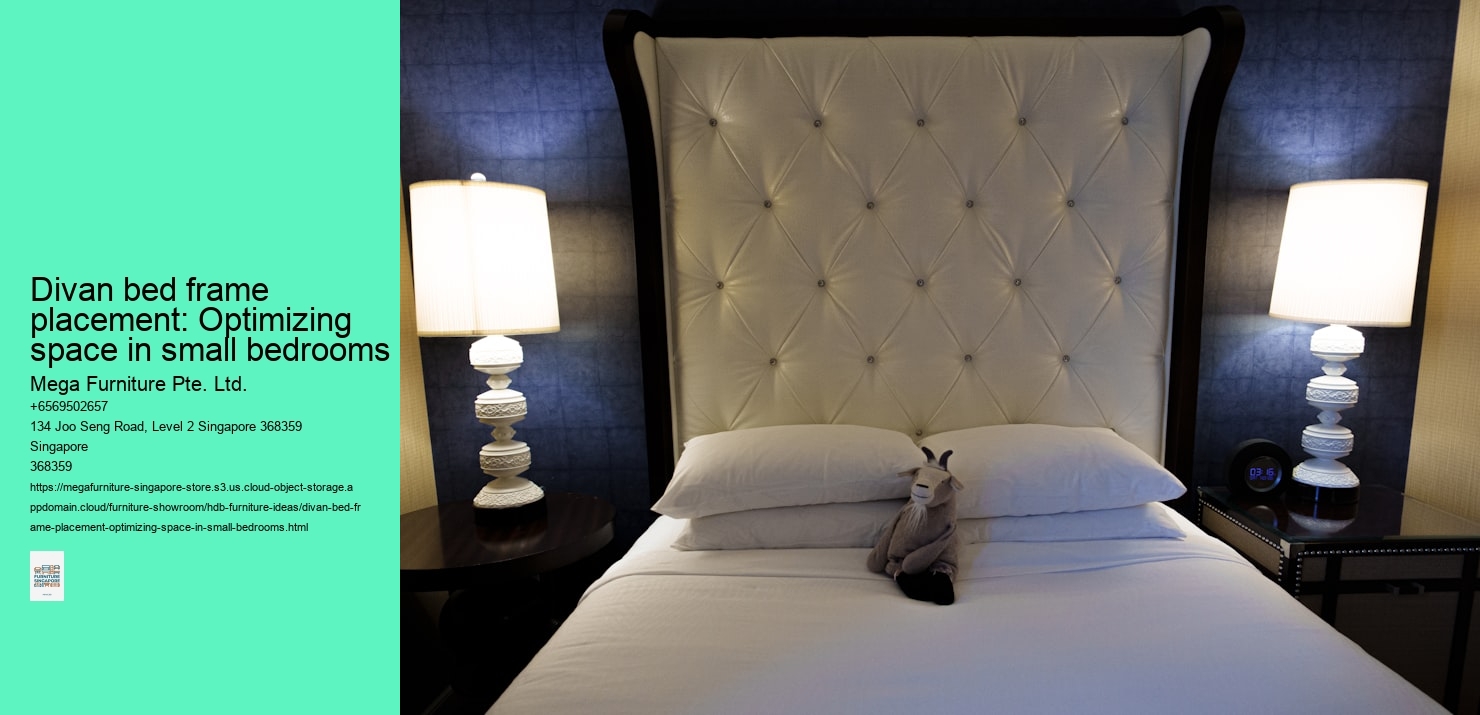
A King-size divan looks impressive on a showroom floor, its generous expanse promising marital comfort and luxury. In a 12 sqm common bedroom, that promise becomes a logistical nightmare. The standard King width, around 182 to 183 centimetres, will consume nearly the entire width of a room that’s roughly three metres across, leaving mere strips of floor on either side. You’ll have a bed, but you’ll lose the space for everything else a functional room needs.
Consider the practical movements within a 4-room BTO flat. A wardrobe, even a slim one, requires about 60 centimetres of depth. A nightstand needs another 40 or 50. Trying to squeeze these around a King frame often means one item gets sacrificed, or both end up crammed into awkward corners that block the natural flow. The essential access path from the door to the window, or to the other side of the bed, disappears—you’ll be climbing over the mattress to get to the other side, a daily irritation that feels anything but luxurious. A bed frame is the one piece of bedroom furniture you sleep on every night for years, so it's worth getting right rather than treating as an afterthought to the mattress. Shopping for a bed frame in Singapore comes down to three decisions: the size your room can take, the material, and whether you need storage built in. Sizes run from a 91cm single through to a king around 182 to 183cm — and the honest first step is measuring the room, the doorway, and the lift, since the bed has to get in before it can fit. Material sets the tone and the upkeep: wood for warmth, metal for a slim modern profile, upholstered or divan for softness. And in a compact flat, a storage frame turns the space under the mattress into the cheapest storage you'll ever add. Get those three right and the frame becomes a foundation you won't think about again for a long time.. A Queen, at 152 centimetres wide, provides a comfortable sleeping area for two while preserving that crucial circulation space. It allows for a proper furniture layout where each piece has its place, and you can actually walk around the room.
There’s a common assumption that a bigger bed automatically means better sleep. In a constrained space, the opposite can be true. The frustration of a cramped room, where you’re constantly navigating obstacles, adds a subtle stress that undermines relaxation. A Queen or even a Super Single for a single occupant creates a sense of order and openness, which contributes far more to nightly comfort than a few extra centimetres of mattress width. You get the restful environment, plus the practical ability to store your belongings in a proper wardrobe instead of under a bed buried against the wall.
The one exception? If that common bedroom is destined to be a dedicated guest room with minimal daily use, and storage is handled elsewhere. Then, a King can work as a pure sleeping zone. But for a daily-use room in a typical flat, where living happens beyond just lying down, the smaller size is the smarter choice. It’s about balancing the dream of the bed with the reality of the room.

That afternoon sun in a west-facing room isn't just about the glare or the heat—it’s the humidity that comes with it. You get that intense, golden light baking the room for hours, and the air gets heavy, thick with moisture that doesn’t really leave until evening. In a typical 4-room BTO master bedroom, that’s a daily cycle, year-round. If you put a fabric divan bed against that window, you’re setting up a perfect trap for all that dampness.
The divan’s upholstered base sits flush on the floor, with no real air gap underneath. The mattress sits directly on top, sealing everything in. Over months, that trapped moisture starts working its way into the fabric cover of the divan itself. By the third year, you might notice a faint musty smell, or darker patches along the sides where the fabric meets the floor. That’s mildew, and it’s not coming out. The base fabric isn’t meant to be cleaned like a mattress protector—once it’s stained, it’s stained.
There’s a straightforward fix for this, though. Choose a divan with a ventilated design, one that has gaps or a raised platform construction underneath to let air circulate. Or, frankly, skip a fabric divan entirely in that spot. A simple wooden or metal platform frame, even a storage bed with drawers that leave a channel under the mattress, will handle the climate much better. The one exception? If you’re absolutely committed to that divan look and your west-facing room has superb, constant air-conditioning that keeps the humidity locked down—then maybe it’s a calculated risk. But for most flats, where the AC is off for hours each day, that’s a gamble you’ll lose.
It’s a material issue, not just a style choice. Particleboard or MDF in a divan’s structure will swell and soften with that sustained dampness, too. Plywood or solid wood frames hold up. So when you’re looking at options, ask about the base construction—got ventilation or not? That’s the question that matters more than colour or finish for a room catching the afternoon sun.
" width="100%" height="480">Divan bed frame placement: Optimizing space in small bedroomsThat layer of stagnant air trapped under a solid base is the real enemy in a humid flat. It’s not just about feeling stuffy; it’s about what grows there when moisture can’t escape. Rubberwood slats spaced a few centimetres apart create a channel for air to move, pulling away the dampness that settles around a mattress. This constant passive ventilation is what keeps things dry, especially in those east-side neighbourhoods where the air feels heavier. A sealed platform might look sleek, but it’s essentially creating a sealed environment perfect for mildew. The slatted design corrects that by letting the room’s air do its job.
Going low-profile isn’t just a style choice—it’s a practical one for common bedrooms where every centimetre counts. A standard divan can feel imposing in a space that’s already tight, visually crowding the room and making it harder to move around. The lower frame brings the bed closer to the floor, which creates a sense of openness even in a compact 12 sqm room. You’ll find it easier to place other furniture, like a study desk or a small wardrobe, without the bed dominating the layout. This corrected height maintains the essential function of a divan while reducing its physical footprint.
The whole point of choosing a divan is often the built-in drawers, so any design change must preserve that utility. A slatted platform doesn’t interfere with the drawer mechanisms; you can still pull them out smoothly to access seasonal clothing or extra bedding. The lower overall height might actually make it easier to see into and organise the drawers, compared to bending over a taller frame. In a Tampines flat where storage space is precious, losing that drawer function would be a deal-breaker. This correction ensures you get the ventilation benefit without sacrificing the practical storage you bought the frame for.
Rubberwood is the key component here, not just for its affordability but for its performance in our climate. Kiln-dried hardwood like this resists warping better than many softer woods, which is crucial when it’s supporting your mattress night after night. The slats themselves need to be strong enough to bear weight without sagging over years, and rubberwood provides that reliable structure. It’s a material that handles the constant ~80% humidity without complaining, unlike particleboard that can soften. Choosing the right wood for the slats turns a simple design feature into a long-term durability decision.
This specific correction is a direct response to Singapore’s environmental reality, not a generic design trend. In Bedok or any neighbourhood near the coast, the damp air seeps into everything, and furniture needs to help fight it. A solid platform base acts like a sponge, trapping moisture against the mattress underside where you can’t see it. The slatted alternative is a proactive defence, a way to let the bed frame work with the climate rather than against it. It’s a small engineering change that addresses a very big, very local problem of longevity and hygiene. For anyone furnishing a flat here, that’s a consideration that can’t be ignored.
Choosing the correct bed frame size is critical for Singapore's compact room layouts. A Queen-size frame (152x190cm) typically fits a standard HDB master bedroom, but you must leave about 60cm of clearance on the exit side for movement. Always measure your room's internal doorways and the HDB lift opening—often the limiting factor at roughly 90cm wide—to ensure the frame can be delivered.
The bed frame’s material directly impacts its longevity in your home. Solid wood or plywood frames withstand daily use better than particleboard, which can swell in our humid climate. For upholstered options, high-density foam in the headboard and performance fabrics like Crypton offer better stain resistance and shape retention over the years. Rubberwood is a common, affordable hardwood choice for a solid frame.

It’s a common scene in a showroom: buyer gets excited by a Queen-sized divan with those deep, cavernous drawers. They’re picturing all the spare pillows and winter blankets finally having a home. What they’re not picturing is an elderly parent trying to get their knees under that same bed frame every morning. The clearance between the floor and the underside of the frame—the leg height—often gets overlooked entirely when storage is the star of the show.
That clearance matters more than you think. For a multi-gen setup in a 4-room BTO, it’s not just about the bed fitting the room; it’s about people fitting around the bed. A low-slung frame forces an awkward shuffle or a deep bend to access those prized drawers. For someone with mobility concerns, that daily manoeuvre becomes a real chore, turning a practical storage solution into a physical obstacle. You want drawers that help, not hinder.
So measure twice, buy once. Don’t just note the drawer depth—get the tape and check the gap from the floor to the bottom of the frame’s side rail. You’ll want enough space for a person to comfortably stand close, bend their knees, and pull a drawer open without contorting. In many flats, a clearance around 15 to 20cm makes a tangible difference. It’s a small dimension that carries a big weight in daily living.
There’s a straightforward exception here. If the bed is strictly for a child’s room or a guest room that sees infrequent use, then maximising drawer volume can be the smarter trade-off. But for the master bedroom in a household planning for ageing parents or even for your own future ease, leg height isn’t a minor detail—it’s a key part of the bed’s long-term functionality. Prioritise the space for the people first, then organise the storage within that framework.
For a resale three-room flat where the bedroom might be tighter than a newer BTO, a divan with an adjustable base height is a practical move that solves a few problems at once. You'll want legs that can be set higher than the usual low-profile platform—something around 25 to 30 centimetres off the ground. That extra clearance makes a real difference for elderly family members or anyone with mobility concerns, turning getting up from bed into a less strenuous affair. It also brings the mattress top neatly level with the typical height of a bedside table in these older layouts, so your cup of tea or reading lamp sits right where you need it without that awkward gap.
The storage drawer count shouldn't be your main focus here. Two well-placed drawers, accessible from the sides without having to shift the whole bed, are more useful than four crammed underneath that you can't reach. In a compact room, you might only have one clear side free anyway, so prioritise drawers that actually open fully. Look for a base where the legs are solid and fixed—no wobble—and the mechanism for adjusting them is straightforward, maybe just a simple bolt system you can handle yourself with a wrench.
The only time I'd skip this configuration is if your floor space is truly extreme, say a bedroom under three metres square where every centimetre counts. In that scenario, the higher legs might visually eat into the room's proportion, and a lower platform could feel more grounded. But for most three-room resale flats, the functional gain outweighs that slight visual lift. You get easier cleaning under the bed, better air circulation in our humid climate, and that crucial bit of accessibility that makes daily life smoother. It's a small adjustment that pays off every morning and night.


You’re scrolling through a dozen fabric options online, each promising durability and comfort, but you’re really just staring at a colour swatch on a screen. That’s the gap between browsing and buying—a gap that’ll cost you if you’re committing to a Queen-size divan. The weave density, the feel against your skin, the way it holds up in our humidity—these aren’t specs you can gauge from a photo. You need to put your hands on it, and that’s where a showroom visit becomes non-negotiable.
At a physical showroom, you can sit on the actual divan base, not just admire it. You’ll feel whether the fabric is cool or clammy, whether it has a tight weave that resists dust or a looser one that might pill over time. Humidity around here is a constant test; a fabric that feels fine in a controlled warehouse might feel entirely different in a west-facing 4-room flat after a year of afternoon sun and monsoon moisture. That tactile check is something you can’t delegate to reviews or product descriptions.
Then there’s the pairing with the mattress. A fabric might look perfect, but how does it feel when you’re actually lying on it with the mattress you’ve chosen? Testing the firmness and support with the in-house Somnuz® mattress line lets you experience the complete sleep surface. You’ll know if the base fabric complements the mattress’s feel, or if there’s an unexpected friction or lack of breathability that only becomes apparent under real weight and pressure. It’s about confirming the whole package, not just approving one component.
The one exception? If you’re absolutely certain you’re reordering the exact same fabric and mattress combo you’ve owned before, and you’re just replacing a worn-out frame. Then, maybe you can skip the trip. But for any new selection, especially for a piece that’ll dominate your bedroom for years, that hands-on confirmation is the only way to avoid a costly mismatch. You’ll know straight away if a fabric is a yes or a no—no second-guessing after delivery.
Buyer wants storage drawers, but the clearance needed is something you don’t measure until you try to pull them out. That’s the classic slip. You’ll need about 30cm of floor space beside the bed for the drawers to fully extend—enough to stand in front and open them comfortably. Anything less, and you’ll be kneeling and wrestling with a half-open drawer every time you need something. In a tight 4-room BTO common bedroom, that 30cm can eat up precious walking space, so you might end up pushing the bed flush against a wall on one side.
Can a divan base withstand year-five humidity in an Eunos flat? The answer hinges on what’s inside the box. A plywood or kiln-dried rubberwood frame will hold up steady. Particleboard or MDF, though, will swell and soften in that sustained 80%+ humidity—the joints get spongy, the drawers start to stick. It’s not the divan design that fails; it’s the core material. So you’re buying the timber, not just the storage.
Is a Queen divan too large for a 4-room BTO common bedroom? A standard Queen is 152 by 190cm. In a room around 12 sqm, you can fit it, but you’ll likely sacrifice any other furniture besides the bed. Leave at least 60cm clearance on the side you exit from, and about 30cm on the other sides. If your layout can’t give you that walkway, you’ll feel cramped every morning. The only time I’d say go for it is if that room is purely a sleeping cell with zero other functions.
What material best for toddler spills? Forget delicate fabrics. You want a performance textile like Crypton—it’s engineered to resist stains and wipe clean. Dark colours or patterns hide the inevitable juice mishaps better than a light solid. A bouclé or loose weave will trap dust and kena stains permanently. Leather, even genuine, can be a worry with humidity and sharp little toys. The spill-proof fabric is the one you won’t regret.

You’ve got your floor plan sketch and you’re ready to head out, but there’s a real risk in skipping the final verification at home. It’s the difference between choosing a bed that fits your room and one that fits your life. So grab your measuring tape and spend ten minutes on these checks—they’ll save you hours of regret later.
First, verify those room dimensions, especially the window orientation. A west-facing window means afternoon sun blasting onto your bed frame, which can fade fabrics and dry out materials over time. That might push you towards a finish that handles heat better, or a placement that avoids the direct glare. And while a Queen bed fits most master bedrooms, you need to measure the path from the door to your intended bed position. Can you actually walk a 152cm wide frame through your bedroom doorway? Internal doors are usually the tightest point, not the lift. Leave a 2–5cm buffer because skirting eats space.
If there are elderly users, note their needs now. A low platform frame might look sleek, but a higher divan with sturdy edges makes getting up and down easier. Consider whether drawers underneath are accessible without excessive bending, or if a hydraulic lift-up storage system requires too much overhead clearance. This isn’t just about comfort; it’s about safety and long-term usability.
Then, decide your priority: storage or ventilation. In a 12 sqm common bedroom, you might desperately need the extra space for luggage and bedding. But a storage bed packed with drawers can block airflow underneath, which in our humidity can encourage mould if the room isn’t well-ventilated. It’s a trade-off. If ventilation is your main concern, a simpler frame with open space below might be the better call, even if you sacrifice some storage.
Bring your annotated floor plan to the showroom. Having your room’s real constraints—the door swing, the window position, the clear walkway—down on paper means you can ask specific questions. You can point to your sketch and say, “With this layout, can the drawers open fully?” That concrete information turns a browsing trip into a productive decision. Don’t just measure the room; measure the life you’ll live in it.