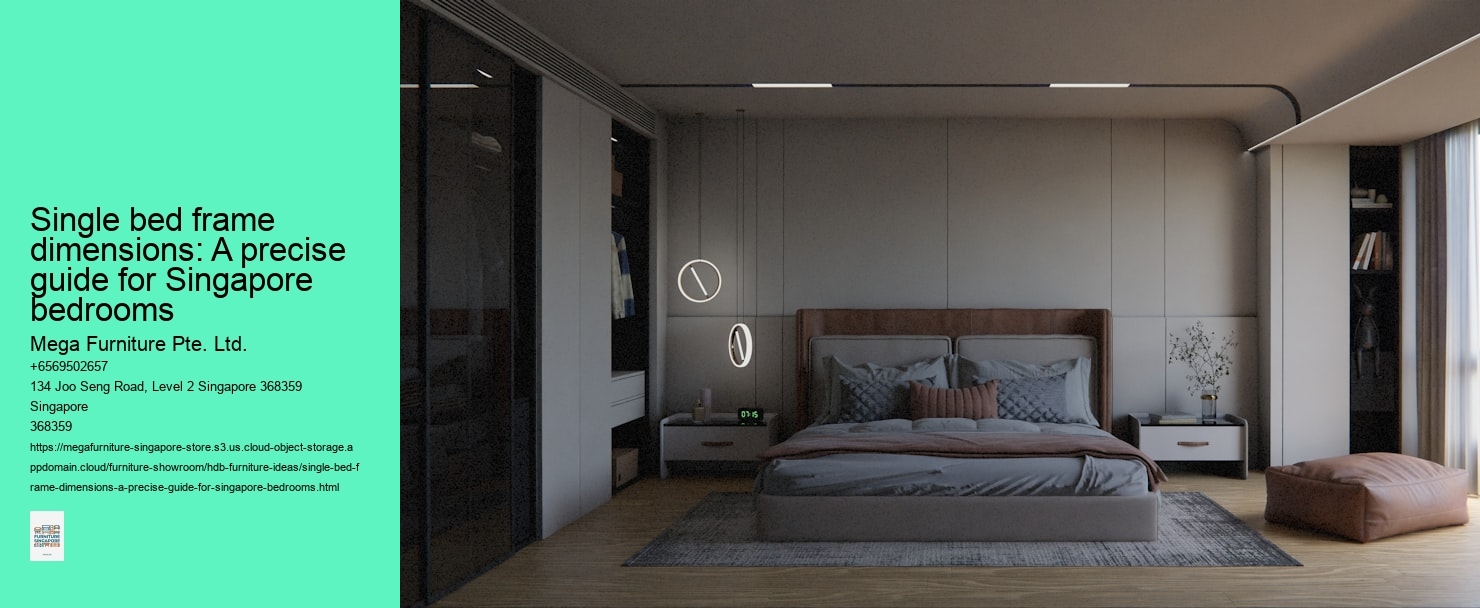
The classic Singapore bedroom scene: a new bed frame arrives, all neatly packaged, and you realise it’s blocking the air conditioner vent or sitting right over the skirting board so the wardrobe door can’t swing open. That’s the domino effect of skipping the tape measure. In a typical 12 sqm HDB common bedroom, every centimetre counts—a standard Single frame at 91cm wide might seem manageable, but add the headboard thickness, the side rails, or the overhang of a platform base, and you’re suddenly eating into the precious 60cm clearance you need beside the bed for movement. The wardrobe door needs its arc of space, the window needs airflow, and you can’t just shove the frame against the wall and hope it fits.
It’s not just about the room’s floor plan. You have to account for the journey in. The lift door opening, often around 90cm wide, is the real bottleneck. A rigid frame that’s 91cm wide plus packaging might not turn into that opening, even if a flexible mattress can bend and slide through. A bed frame is the one piece of bedroom furniture you sleep on every night for years, so it's worth getting right rather than treating as an afterthought to the mattress. Shopping for a bed frame in Singapore comes down to three decisions: the size your room can take, the material, and whether you need storage built in. Sizes run from a 91cm single through to a king around 182 to 183cm — and the honest first step is measuring the room, the doorway, and the lift, since the bed has to get in before it can fit. Material sets the tone and the upkeep: wood for warmth, metal for a slim modern profile, upholstered or divan for softness. And in a compact flat, a storage frame turns the space under the mattress into the cheapest storage you'll ever add. Get those three right and the frame becomes a foundation you won't think about again for a long time.. Then there’s the internal bedroom door, usually tighter than the main door. If the frame clears the lift but kena stuck at the bedroom threshold, you’re facing staircase carrying charges or a very sian negotiation with the delivery team. Always leave a 2–5cm buffer on the stated dimensions—the skirting board alone eats 1–2cm off your wall-to-wall measurement.
Once it’s in the wrong place, the cascade starts. The mattress won’t sit flush if the frame’s internal support ledge is too narrow or too wide, leaving a gap that feels unstable. Bed linens hang awkwardly over the sides because the frame’s height or shape doesn’t match the mattress thickness. And if you opted for a storage bed with drawers, those drawers will jam against the skirting or the wall, rendering your extra storage useless. That initial assumption—that a single bed fits any room—costs you function every day.
The one real exception? If you’re furnishing a dedicated kids’ room in a larger flat where layout is generous and you’re certain about future rearrangements, maybe you can prioritise style over precise fit. But for the majority of flats, especially BTOs and resale units where space is engineered, measuring isn’t a nice-to-have—it’s the first step that decides everything else. Get the tape out before you even look at styles.

Picture a mattress that’s supposed to sit flush on its frame, but instead it’s perched unevenly, leaving a gap at one corner you can almost wedge your hand into. That’s the first sign a frame doesn’t match the mattress dimensions properly, and it’s not just a cosmetic flaw. Over months, the foam will degrade unevenly because parts of it aren’t getting proper support—you end up with a sleep surface that sags in one spot while another remains firm. It’s a recipe for restless nights and a prematurely worn-out mattress.
In our humidity, this mismatch accelerates problems. Uneven pressure points mean some areas of the mattress compress more, trapping moisture and reducing airflow. Those damp, compressed sections become prime real estate for mould growth, especially if the room’s ventilation isn’t ideal. A mattress that might last seven or eight years under normal conditions can see its lifespan cut short by a couple of years because of this. You’re not just losing sleep quality; you’re replacing the mattress sooner than you should.
The only scenario where I’d say a slight mismatch is tolerable is if you’re using a very firm, high-density foam mattress on a solid platform bed with only a minor lip discrepancy—the mattress’s own rigidity can sometimes bridge a small gap without sagging. But for the typical memory foam or latex mattress, an uneven foundation is a definite no. It’s one of those things you won’t notice on day one in the showroom, but you’ll feel it every morning after six months. So when you’re measuring, don’t just check if the frame fits the room; make sure it’s a perfect match for the mattress you’re putting on it. That’s the real test.
The labelled dimensions you see online are almost always for the mattress platform alone. That's a trap. The total occupied floor area includes the thickness of the headboard, the width added by side rails, and the space taken by protruding legs. A platform frame with a 10cm thick headboard pushes the bed's effective length beyond the standard 190cm, and legs that extend outward can add several centimetres to each side. You need to measure the product's full external dimensions, not just the internal sleeping surface. For a typical 4-room BTO master bedroom, that extra few centimetres can determine whether you'll have a clear walking path or just a cramped squeeze. Ignoring this is how you end up with a bed that fits the mattress but doesn't fit the room.
Before you even pick a tape measure, you must account for the other furniture already committed to the space. In a common bedroom scenario, that means a wardrobe and a study desk are your fixed points. Their placement dictates the remaining free floor area. A wardrobe typically occupies a 60cm depth along one wall, while a desk needs about 80cm by 60cm. Plot these first on a rough sketch of your room's 3.5 by 3 metre rectangle. The leftover space is where your bed must go, and that's the zone where you'll calculate your clear walking paths. This inventory step prevents the classic mistake of measuring for the bed in an empty room, only to realise later there's no space for anything else.
Clear walking path width is the practical metric that tells you if a layout works. After placing your wardrobe and desk, you'll have a main circulation route—usually along the side of the bed leading to the door. For a comfortable flow, you want at least 60cm of clearance here. In a 4-room BTO master bedroom, with a Queen bed frame's true footprint of about 152cm width plus side rails, you might only achieve a 50cm path if the other furniture is poorly arranged. That's borderline. You can shuffle the desk or opt for a shallower wardrobe to reclaim space. The calculation isn't just about fitting the bed; it's about preserving movement. A path under 45cm feels cramped and impractical for daily use.
Working in imperial units introduces unnecessary conversion errors in a market where everything is sold in centimetres. Singapore retailers list bed frames in cm, room dimensions are given in sqm, and your tape measure is marked in cm. Sticking to metric keeps your math consistent and avoids the rounding mistakes that come from converting inches to centimetres. When you're calculating a tight clearance of, say, 58cm, a conversion slip could easily lose you 2–3cm—enough to block a drawer from opening fully. Use a metric tape, sketch your plan in centimetres, and compare product specs directly without translation. This precision is especially critical for online shopping, where you can't physically verify sizes before purchase.
The most reliable method isn't a mental estimate; it's a simple floor plan sketch. Draw your room's dimensions on paper, mark the fixed furniture positions, and then draw the bed's true footprint—including headboard and leg extensions—as a rectangle. This visual exercise reveals pinch points instantly. You'll see if the bed blocks a wardrobe door or if the path to the window is obstructed. For a typical 4-room layout, sketching often shows that a Queen with a bulky headboard works only if you place it against the wall opposite the door, not perpendicular to it. It's a five-minute task that saves you from the costly realisation after delivery that your chosen frame makes the room feel claustrophobic. That sketch is your final proof before committing to a purchase.

A rubberwood frame that looked perfectly straight in the showroom can start to twist within a year if it’s parked in a west-facing bedroom. That afternoon sun, especially during the dry months, heats the room up like a greenhouse, and the humidity—often around 80% or more—doesn’t let the wood settle properly. It’s a specific, punishing combination that some materials just can’t handle. You might think a solid wood frame is inherently sturdy, but without considering your room’s orientation, you’re buying for a climate it wasn’t built for.
Metal frames offer a different kind of vulnerability. They seem like a safe bet for a humid environment, and they often are in a centrally-located, air-conditioned flat. But if you’re living in a coastal neighbourhood like Bedok or Tanah Merah, the salt-laden air is a stealthy enemy. It accelerates corrosion, especially on joints and welds that aren’t perfectly sealed. A little surface rust might seem cosmetic, but it can compromise the frame’s integrity over time, leading to squeaks and eventual failure. That’s a longevity issue you won’t notice until it’s too late.
Then there’s the issue of stagnant air. A poorly ventilated corner in a common bedroom, perhaps tucked away from the main airflow path, creates a pocket of sustained moisture. This is where plywood’s layered construction can become a liability. While plywood is relatively stable compared to particleboard, prolonged exposure without air movement can lead to delamination—the layers start to separate. It’s not about the plywood swelling; it’s about the glue bonds weakening over years of silent, damp assault. This one’s a slow process, but it’s a sure one if the conditions are right.
So the real question isn’t just which material looks best or feels most solid in the shop. It’s about matching that material’s known weaknesses to your flat’s specific environmental stresses. For a west-facing room, you’d want a frame that’s been properly kiln-dried to resist warping. For a seaside unit, a metal frame needs a superior finish, maybe a powder-coated one that seals the surface completely. And for any bed placed in a dead-air zone, ventilation becomes a non-negotiable part of the layout—you might even need to leave a bigger gap behind the headboard just to let air circulate. The only time this stress test becomes less critical is if you’re running the air-conditioner nearly constantly, creating an artificial, dry bubble that protects your furniture. But for most of us living with the windows open, the local climate is the final judge of your purchase.
In a typical 12 sqm common bedroom, the floor area is often less than you think once you’ve placed a single bed and a modest dresser. That’s where every centimetre becomes a negotiation. A sleek platform frame gives you a clean, low profile that can make the room feel a bit more open, but it surrenders all that potential storage volume under the mattress. The alternative is a divan or a storage bed with built-in drawers, which adds function but also adds bulk—typically extending the footprint by 10 to 15 centimetres on the sides. In such a tight space, that extra width feels significant when you’re trying to navigate around it or fit another piece of furniture.
For most people living in our compact flats, storage wins over aesthetics hands down. You’re not just storing extra pillows or a spare blanket; you’re likely looking for a place for seasonal clothing, bulky luggage, or that extra set of bed linen you use during the year-end monsoon when everything feels damp. A dresser alone often doesn’t cover it, and under-bed space is prime real estate. The drawer option turns dead air into a functional cabinet, and that’s a trade-off worth making in a 3-room or 4-room BTO where built-in wardrobes are standard but not expansive.
There is one clear exception. If you’ve already got ample built-in storage in the room—say, a full-height wardrobe system that handles all your seasonal items—and you truly prioritise a minimalist look or need every inch of floor space for movement, then the platform frame’s cleaner lines are the better call. That’s a specific scenario, though, and not the common one. For the majority, the slight increase in footprint is a minor inconvenience compared to the daily convenience of having those items organised and out of sight.
Think about the practical geometry. A standard single bed frame is 91 centimetres wide; adding drawers might push the total width to around 105 or 110 centimetres. In a room that’s maybe 3 metres wide, that extra 15 centimetres along one wall is a calculation you can make with a tape measure. It often means you can’t fit a bedside table on that side, or the walking path beside the bed gets pinched. But if losing that bedside table means gaining four large drawers, it’s a swap many will accept. The key is to measure your actual room, including the skirting, and see if that extra width leaves you the minimum 30 centimetres of clearance you need on the other sides. If it does, the storage bed is a no-regrets choice.


A photo online can't tell you how a fabric will hold up against the humidity in a west-facing 4-room BTO. That weave density, the way a colour shifts under afternoon sun, the texture that might trap dust—all that's invisible on a screen. You need to get your hands on it, to see if a dark patterned upholstery really hides stains better than a light solid, or if a bouclé weave will snag. That's the difference between a piece that lasts and one that looks sian after a year.
The same goes for firmness. You can't gauge foam density from a product description. Sitting on a mattress on its actual frame, not just on a display pedestal, tells you if you'll sink in too much or if it'll hold its shape. Testing drawer glide in a showroom lets you feel if the mechanism is smooth or if it'll start sticking after a few months of use in a humid room. Inspecting joinery under a bed frame reveals whether it's solid wood or particleboard—the latter can swell in our climate.
So, you really should make the trip. A typical master bedroom around 3.5 by 3 metres needs a bed that fits both the space and your comfort. Seeing a Queen frame in person lets you judge if the storage drawers will actually open with your planned bedside table placement, or if the headboard height works with your wall. It's about confirming the build quality beyond the marketing shots.
The only time I'd skip a showroom visit is if you're buying a straightforward replacement—a known size, a trusted material you've used before, and you're okay with a minor gamble on the exact finish. But for a major piece like a bed frame, where you'll use it daily for years, that gamble isn't worth it. You want to know the feel, the sound of a drawer closing, the solidity of the frame when you press on it. That assurance comes from being there, not from scrolling.
You’ve probably seen the same questions popping up in forums and showroom chats. They’re the kind of things that trip you up just when you think you’ve nailed the choice.
Can a single bed frame fit a super single mattress? No, it won’t. The difference is a solid 16 centimetres in width—that’s not a gap you can ignore. A standard single frame is built for a 91 by 190cm mattress, while a super single is 107 by 190cm. Trying to squeeze the bigger mattress onto the smaller frame means it’ll overhang, feel unstable, and likely damage the frame edges over time. You’d need a super single frame, or a Queen if you want more room to grow.
How much space should you leave around the bed for cleaning? Give yourself at least 30 centimetres on the sides that aren’t your main exit path. For the side you get out from, aim for 60cm. That’s enough room to comfortably walk past and also to pull out a vacuum cleaner or mop without having to climb over the bed. In a tight 12 sqm common bedroom, that 60cm might feel like a luxury, but it’s what makes weekly cleaning possible instead of a chore.
Which frame material lasts longest in a humid condo? For our climate, kiln-dried solid wood or good plywood are the steady ones. They’re built to handle the moisture without swelling or softening like particleboard can. Solid wood might move a little with the seasons, but that’s normal—it doesn’t mean it’s failing. The one exception? If your condo gets direct west sun that really heats up the room, even good wood needs a bit of care to avoid drying out too much.
Do storage beds need extra floor reinforcement in an HDB? Generally, no. HDB floors are designed to handle the load of a bed with storage, especially if you’re using it for typical items like spare bedding or luggage. The concern comes if you’re planning to turn that storage into a mini warehouse for heavy collectibles or tools—then the weight distribution changes. For normal use, a well-built storage bed on a flat floor is fine.
Getting a bed frame into your flat depends on Singapore’s specific access constraints. The tightest point is often the HDB lift door, which is typically 90cm wide—you must account for the packaged frame’s width. Always leave a 2–5cm buffer and measure your corridor turns and final doorway, usually 91.5cm wide. Confirm your item’s packed dimensions with the retailer to avoid delivery day issues.
The material dictates a bed frame’s lifespan and feel in a Singapore home. Solid rubberwood or hardwood plywood frames resist humidity and weight better than laminated particleboard, which can warp. For upholstered options, performance fabrics like Crypton offer stain resistance, while high-density foam ensures cushions hold their shape for years under regular use. Leather headboards need ventilation to prevent mould in our climate.
Walk into any showroom unprepared and you’ll find yourself staring at a dozen bed frames, all looking equally good, and your head will start to spin. That’s why your last step before you leave home isn’t about browsing online—it’s about settling four concrete things on paper so the showroom trip becomes a filter, not a free-for-all.
First, finalise your room measurements. Don’t just eyeball it; get the tape out. A standard Single is 91 by 190cm, but you need to know how much floor space remains after it’s in. That 60cm clearance on the exit side isn’t a luxury; it’s what keeps you from feeling cramped every morning. And remember the skirting—it eats a centimetre or two, so leave a buffer. A drawing, even a rough one, saves you from buying a frame that turns your 12 sqm common bedroom into a tight squeeze.
Second, decide your storage priority before you see the options. Do you need drawers for extra bedding, or a hydraulic lift for bulky luggage? This choice isn’t just about capacity; it’s about your room’s overhead clearance and floor space. A lift-up mechanism needs room above to open fully, while drawers need free floor beside the bed to slide out. If your priority is maximising space, the hydraulic storage bed is usually the smarter pick—unless your ceiling is low or you’ve got other furniture blocking the sides.
Third, set a realistic budget band and stick to it. In Singapore, a decent single bed frame typically falls within a certain range. Having that number settled means you can immediately dismiss the gorgeous but overpriced options and focus on what’s actually feasible. It also helps you quickly assess whether extra features like built-in lighting or premium upholstery are worth the stretch, or if they’re just pushing you into impulse territory.
Finally, confirm your delivery access. This one’s often overlooked until the truck arrives. Check your lift door width—it’s usually around 90cm, not the full interior width. If you’re in an MRT-linked block with newer lifts, you’re probably fine, but older estates can have tighter entries. A rigid frame that won’t bend is a staircase surcharge waiting to happen. Knowing your access limits means you can ask the right questions on the spot and avoid a logistical headache later.
Bring these four settled points to the showroom. They turn a overwhelming array of choices into a simple checklist: does it fit the room, does it meet the storage need, does it sit within the budget, and can it actually be delivered? That’s how you walk out with the right frame, not the one that just looked good under the showroom lights.